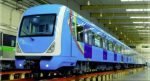
Kaduna Light Rail Controversy: Former SEC Officials Deny Wrongdoing, Accuse ICPC Of Bias



Former members of the Kaduna State Executive Council (2015-2023) have denied any wrongdoing regarding the controversial Kaduna Light Rail Project, insisting that all financial transactions were transparent and lawfully executed.
This response follows a move by the Independent Corrupt Practices and Other Related Offences Commission (ICPC), seeking a court order for the forfeiture of N1.3 billion allegedly paid into the account of an unregistered company in relation to the project.
In a statement issued on Wednesday, the former council members described the ICPC’s actions as “biased and obviously twisted,” accusing the commission of attempting to tarnish their legacy.
According to the statement, the Kaduna Light Rail Project was conceived in October 2015 as part of former Governor Nasir El-Rufai’s administration’s vision to modernize Kaduna’s transport infrastructure.
The project, estimated to cost between $600 million and $700 million, was to be funded through a Public-Private Partnership (PPP), with 85% financing from the Indian Export-Import Bank and 15% equity contribution from the Kaduna State Government.
Following a competitive tender process, an Indian firm, Skipper, secured the contract, with Systra and GTA Engineering Limited engaged to conduct feasibility studies.
READ ALSO
- FCTA Spends $272m On Additional 5.76km Light Rail Track
- LEAKED AUDIO: I’m Happy Yar’Adua Died, He Planned To Inject Me With HIV, Hepatitis – El-Rufai
The council revealed that N890 million (approximately $2.8 million) was paid for a 291-page feasibility study, which remains the property of the Kaduna State Government.
“A memo was submitted to the Kaduna State Executive Council in November 2017 to seek approval of the feasibility report and payment, which was duly granted,” the statement read. “The project was meant to be a game-changer for Kaduna.”
The statement explained that the project’s progress was stalled after the Federal Government refusal to provide a Sovereign Guarantee for the loan from the Indian Eximbank.
“The then Minister of Finance pushed back, saying Nigeria’s foreign debt burden was already too high. Without this guarantee, we could not proceed with the project,” the statement noted.
Despite this setback, the state had already made an equity deposit of N12 billion. When the project became unfeasible, officials saiad they recalled the funds from Sterling Bank, except for the feasibility study cost.
The former state officials accused the ICPC of shifting its narrative after failing to prove any financial misconduct. Initially, they claimed that N13 billion was missing, but upon being presented with refund evidence and forensic audit reports, the commission allegedly changed its approach.
“Surprisingly, ICPC became hostile and decided to go after Sterling Bank, forcing it to deposit N1.3 billion into an Escrow Account with the Central Bank of Nigeria (CBN),” the statement read. “This money comprises the N890 million feasibility study payment and about N400 million in accrued interest.”
Rather than allowing litigation to determine if a crime was committed, the statement accused the ICPC of being influenced by the current Kaduna State Government to push for forfeiture of the funds.
Addressing concerns over payments made to an account belonging to a yet-to-be-registered company, the former officials defended the move, stating that it was common practice in joint venture arrangements.
“There were differing opinions on whether to use a company registered with the Corporate Affairs Commission or one established by the State House of Assembly,” the statement explained. “Ultimately, Skipper preferred a limited liability company, which led to the establishment of Indo Kaduna Mass Rail System.”
The officials added that Indo Kaduna MRTS-JV Nigeria Limited had already been registered in India, which facilitated negotiations with the Indian Eximbank.
A Call for Transparency
The statement concluded with a challenge to those spreading “lies and falsehoods” to present credible evidence contradicting their claims.
“There is no basis for any forfeiture proceedings. It is sheer oppression and abuse of power,” the statement declared. “We remain committed to the truth and will respond accordingly to any genuine concerns.”
The Kaduna State Government and ICPC are yet to officially respond to the allegations made in the statement.
Hafsoh Isiaq is a graduate of Linguistics. An avid writer committed to creative, high-quality research and news reportage. She has considerable experience in writing and reporting across a variety of platforms including print and online.