
- Retain 7.5% Rate
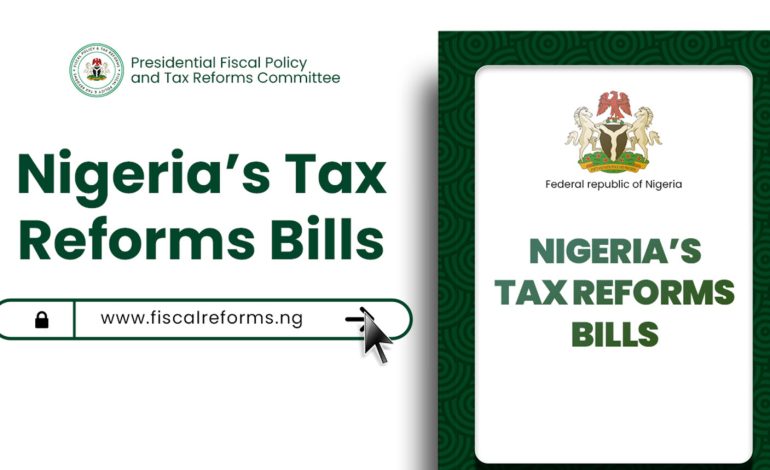
The House of Representatives has approved the highly controversial tax reform bills, effectively shutting down fierce opposition from Northern Governors who had strongly resisted the proposed changes.
During plenary on Thursday, the Chairman of the House Committee on Finance, James Faleke, moved a motion for a clause-by-clause consideration of the bills’ report, leading to its eventual adoption.
The approval came months after President Bola Tinubu urged the National Assembly to pass the Nigeria Tax Bill, the Tax Administration Bill, the Joint Revenue Board Establishment Bill, and the Nigeria Revenue Service Bill.
The bills, which initially faced stiff resistance, particularly from the Northern Governors, were described as a potential threat to the region’s economic interests.
The governors had called for the rejection of the proposed laws, arguing that they would further marginalise Northern states in revenue allocation.
However, in January, the Nigeria Governors’ Forum (NGF) made a U-turn, endorsing the bills after agreeing on an “equitable” VAT-sharing formula.
Despite early resistance, the Senate passed the bills for a second reading in November 2024, followed by the House of Representatives in February 2025 after an intense debate among lawmakers.
A public hearing was later held to address concerns raised by stakeholders.
VAT Hike Rejected, New Revenue Sharing Formula Approved
One of the most contentious provisions in the Nigeria Tax Bill was Section 146, which proposed a gradual increase in the Value Added Tax (VAT) rate from the current 7.5% to 12.5% by 2029 and 15% by 2030.
However, after strong opposition from stakeholders, including the Trade Union Congress (TUC), the committee revised its stance and recommended maintaining the VAT rate at 7.5%. The House overwhelmingly approved this decision.
Additionally, the bill initially proposed a VAT revenue-sharing formula of 15% for the federal government, 50% for state governments and the FCT, and 35% for local governments.
However, the House approved a modified structure, allocating 10% to the federal government, 55% to the states and the FCT, and 35% to local governments.

Sodiq Lawal is a passionate and dedicated journalist with a knack for uncovering captivating stories in the bustling metropolis of Osun State and Nigeria at large. He has a versatile reporting style, covering a wide range of topics, from politics , campus, and social issues to arts and culture, seeking impact in all facets of the society.