Despite Confusion On Gazetted Tax Laws, Implementation To Begin January 1, 2026


The Federal Government has insisted that the implementation of its much-vaunted tax reform laws will begin on January 1, 2026, even as confusion, contradictions and administrative lapses continue to trail the passage and gazetting of the legislation, raising serious questions about competence and transparency.
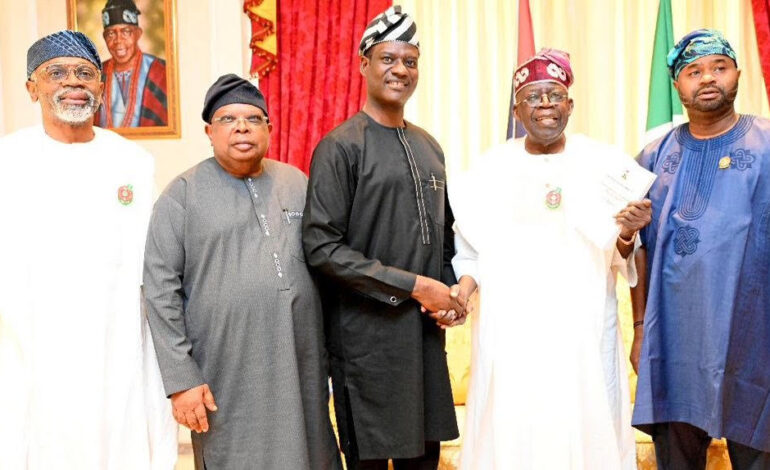
President Bola Tinubu gave the signal during a meeting with members of the National Tax Policy Implementation Committee (NTPIC) at his Lagos residence, a development that has further unsettled stakeholders who argue that the legal foundation of the reforms remains shaky and unresolved.
After the meeting, Chairman of the Presidential Fiscal Policy and Tax Reforms Committee, Taiwo Oyedele, announced that implementation would proceed as scheduled, a declaration that critics see as hasty and dismissive of legitimate concerns over due process and legislative integrity.
The tax reform package comprises four major laws: the Nigeria Tax Act, 2025; the Nigeria Tax Administration Act, 2025; the Joint Revenue Board of Nigeria (Establishment) Act, 2025; and the Nigeria Revenue Service (Establishment) Act, 2025—laws expected to fundamentally reshape Nigeria’s tax system.
However, rather than inspire confidence, the rollout has been overshadowed by public controversy over discrepancies between versions passed by the National Assembly, documents transmitted for presidential assent, and the Acts eventually published in the Official Gazette.
In an unusual admission, the House of Representatives acknowledged the irregularities in a press statement issued on Friday, confirming that concerns had been raised over the harmonisation and documentation of the Bills, issues that should ordinarily have been settled before presidential assent.
The House disclosed that it had hurriedly set up a seven-man Ad Hoc Committee following a Point of Order raised by a member, suggesting that the problems were neither anticipated nor proactively addressed by legislative leadership.
According to the House, the committee is now attempting to reconstruct the sequence of events that led to the confusion, including probing possible lapses, irregularities or even external interference—an exercise many observers believe is coming embarrassingly late.
In what appears to be damage control, the leadership of the National Assembly has directed the Clerk to re-gazette the Acts and issue Certified True Copies, an extraordinary step that has further reinforced public perception of institutional disorder.
Although the House insists the move is merely administrative and does not imply any defect in legislative authority, legal experts argue that the need for re-gazetting undermines the credibility of the entire law-making process.
Critics have also faulted the executive for pressing ahead with implementation plans while the legislature is still scrambling to authenticate the very laws meant to be enforced, describing the approach as reckless and insensitive to constitutional safeguards.
Beyond legal concerns, the controversy has deepened public distrust in a government already accused of imposing harsh fiscal policies without adequate consultation or clarity, particularly at a time when Nigerians are grappling with economic hardship.
Despite appeals by the House of Representatives for the public to avoid “speculation,” many Nigerians remain unconvinced, viewing the unfolding events as yet another example of governance marked by confusion, poor coordination and a troubling disregard for due process—even as January 1, 2026, draws closer.
Sodiq Yusuf is a trained media practitioner and journalist with considerable years of experience in print, broadcast, and digital journalism. His interests cover a wide range of causes in politics, governance, sports, community development, and good governance.