South Korean Ex-President Yoon Bags 5 Years Over Martial Law
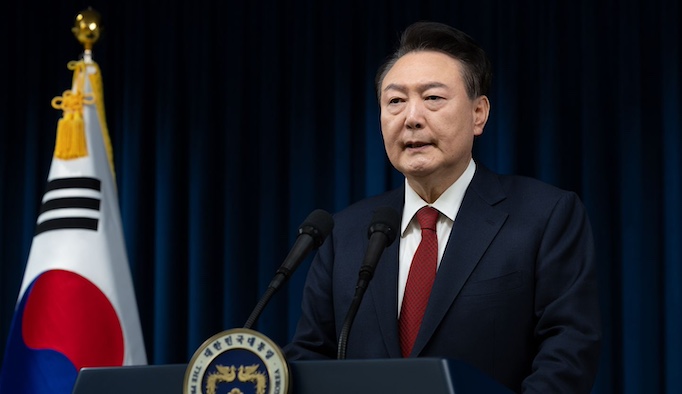


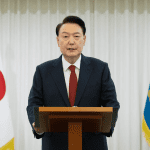
A South Korean court, on Friday, sentenced former President Yoon Suk Yeol to five years in prison after finding him guilty of obstructing justice and other offences linked to his failed declaration of martial law and the turmoil that followed in the country.
Judge Baek Dae-hyun of the Seoul Central District Court ruled that Yoon deliberately blocked investigators from detaining him and unlawfully excluded cabinet members from a key meeting where the imposition of martial law was planned.
“Despite having a duty, above all others, to uphold the Constitution and observe the rule of law as president, the defendant instead displayed an attitude that disregarded the Constitution,” Baek said while delivering the judgment.
“The defendant’s culpability is extremely grave,” the judge added.
However, the court acquitted Yoon of forging official documents, citing insufficient evidence. He has seven days to file an appeal.
Prosecutors had sought a 10-year prison sentence, while Yoon maintained throughout the trial that he broke no laws.
The verdict marks the first in a series of cases confronting the disgraced former leader, whose brief suspension of civilian rule on December 3, 2024, triggered mass protests and a dramatic confrontation in parliament. Yoon was later removed from office and now faces multiple trials arising from the crisis and its aftermath.
In a separate case, prosecutors earlier this week demanded death penalty for Yoon, describing him as the “ringleader of an insurrection” for orchestrating the declaration of martial law. They argued that he showed “no remorse” for actions that endangered South Korea’s constitutional order and democracy.
South Korea, however, has observed an unofficial moratorium on executions since 1997, making any death sentence unlikely to be carried out.
Yoon appeared defiant in court, smiling as prosecutors made their submission. The former president and ex-prosecutor has consistently defended his actions, insisting the martial law declaration was a lawful exercise of presidential emergency powers.
In his closing statement on Tuesday, Yoon argued that “the exercise of a president’s constitutional emergency powers to protect the nation and uphold the constitutional order cannot be deemed an act of insurrection.”
He accused the then-opposition of imposing an “unconstitutional dictatorship” through its control of the legislature, claiming there was “no other option but to awaken the people, who are the sovereign.”
The court is expected to deliver a ruling on the insurrection charges on February 19.
Yoon is also standing trial in a separate case on allegations of aiding the enemy, over claims he authorised drone flights over North Korea to justify the declaration of martial law.
Hafsoh Isiaq is a graduate of Linguistics. An avid writer committed to creative, high-quality research and news reportage. She has considerable experience in writing and reporting across a variety of platforms including print and online.