PERSPECTIVE: Calling On The Patriots: The President Is Incapacitated


- By Sola Fásure
I make this call in my personal capacity, not on behalf of any person, party, group or organization.
Our nation has arrived at a critical moment. We can no longer comfort ourselves with the illusion that all is well. The ship of state is adrift, and every day that uncertainty at the top continues deepens the anxiety of citizens and weakens confidence at home and abroad.
Recent public incidents involving the President have raised serious and legitimate concerns about his health and ability to discharge the enormous responsibilities of his office.
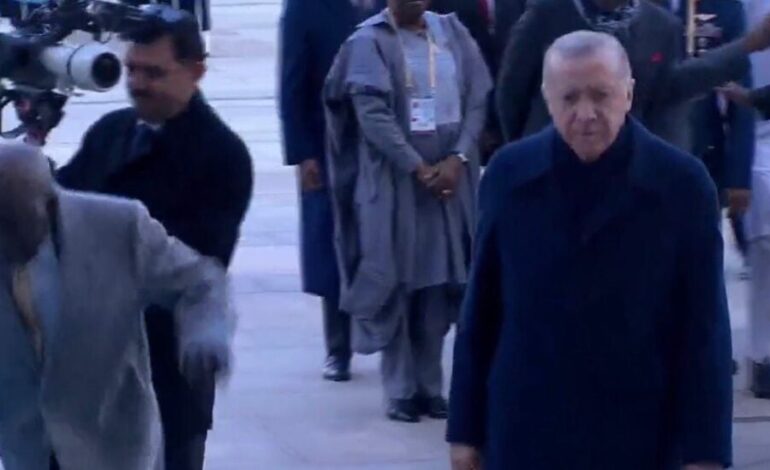
In his state visit to Turkey, the President fell twice and was minded like a baby learning to walk by his host, President Erdogan.
This is really not unusual for people in his age bracket. But since then, he has disappeared from the radar and no one knows where he is presently.
But we saw this during his campaign that he was not a fit and proper person for the office. The concerns raised then on his health were jeered at and then ignored completely. But the chicken has come to roost.
Since then, there has been an unsettling lack of transparency regarding his condition and whereabouts. In a healthy democracy, uncertainty at the very highest level of leadership is not a private matter — it is a national concern requiring accountability and clarity.
This is not about mockery, partisanship, or politics as usual. Age and health challenges are part of the human condition. But leadership of a nation of over 200 million people demands full capacity, clarity of mind, and visible direction. When citizens are left guessing about who is truly in charge, the nation itself is placed at risk.
We have been at this junction before. During the prolonged incapacitation of former President Umaru Musa Yar’Adua, the nation drifted without clear leadership for months. Decisions were stalled, constitutional processes were tested, and Nigeria was forced into an avoidable constitutional crisis before his eventual passing. That period remains a sobering chapter in our history.
It was a painful reminder that when leadership is uncertain, governance falters, public confidence weakens, and national development slows.
Around the world, similar stories have shown how dangerous ambiguity and delays in addressing presidential incapacity can be. Woodrow Wilson in the United States: In 1919, President Woodrow Wilson suffered a massive stroke that left him incapacitated, yet the nation was never formally informed of the full extent of his condition.
As a result, key decisions were delayed or made without proper direction, contributing to setbacks in global diplomacy after World War.
Lansana Conté of Guinea: President Conté’s long periods away for medical treatment, combined with diminished capacity and lack of clear leadership, created a power vacuum that destabilized governance and sparked nationwide unrest. Observers noted that the absence of transparent leadership contributed to protests and deepened political and economic challenges.
Malawi’s constitutional confusion in 2012: After President Bingu wa Mutharika died, senior officials attempted to conceal that fact and delay the succession process, creating uncertainty and risk of a constitutional crisis. It was only after public pressure that the constitutionally mandated transfer of power to Vice-President Joyce Banda occurred.
These cases illustrate a simple truth: when the health and continuity of leadership are shrouded in silence, instability follows. Too often, ambiguity invites speculation, undermines confidence, stalls decision-making, and weakens the very institutions meant to hold power to account.
This is why the Constitution of the Federal Republic of Nigeria provides a lawful and peaceful path forward. Section 144 of the 1999 Constitution (as amended) clearly outlines the procedure for determining permanent incapacity:
The President or Vice-President shall cease to hold office if:
(a) A resolution is passed by at least two-thirds of all members of the Federal Executive Council declaring that the President or Vice-President is incapable of performing the functions of the office; and
(b) That declaration is verified by a medical panel appointed for the purpose and reported to the President of the Senate and the Speaker of the House of Representatives.
If the medical panel confirms permanent incapacity, a notice must be published in the Official Gazette of the Government of the Federation.
This provision exists not for political warfare, but to protect the nation from paralysis at the highest level of governance. It is a constitutional safeguard, designed precisely for moments like this.
It would be both cruel and unpatriotic to knowingly subject Nigeria to the ordeal of leadership uncertainty again. Nigeria is bigger than any one individual. Loyalty to country must be greater than loyalty to office. Patriots across all regions, parties, and faiths must now speak with one voice: the stability, dignity, and effective leadership of Nigeria must come first.
History will remember those who chose courage over convenience.
- Fasure writes from Osogbo
The opinions expressed in this publication are solely those of the author. It does not represent the editorial position or opinion of OSUN DEFENDER.
Sodiq Yusuf is a trained media practitioner and journalist with considerable years of experience in print, broadcast, and digital journalism. His interests cover a wide range of causes in politics, governance, sports, community development, and good governance.
Related posts:
 Nigeria Needs Patriots, Not Ethnic Champions — Afe Babalola
 I’m Not Incapacitated – Governor Ikpeazu
 2026:’You’ve Rendered Your Chairman Incapacitated’, Adeleke’s Aide Mocks Oyetola Backed ‘AMUBO’ Camp For Taking Over Party’s Affairs
 Corps Member Deserves Capital Punishment For Calling Tinubu ‘Terrible President’ – Media Aide