
- Aregbesola, Buhari Provided Grants, Loans To Cooperatives — Findings
- We Have Disbursed More Than N2bn, Committed N4bn – Adeleke
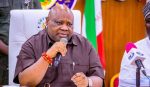
Recent claims by Osun State Governor, Senator Ademola Adeleke, that no government had supported cooperative societies in the state since 1952 are inconsistent with records of interventions carried out by both the immediate past state administration and the Federal Government.
Governor Adeleke had on Tuesday, during an event where the Osun State Cooperative Movement endorsed his second-term bid, stated that the last time cooperatives received government grants was in 1952 and that his administration had now approved nearly ₦4 billion, with about ₦2 billion already disbursed.
He said, “They claim to be Awolowo’s people, yet they worked against the people all the way. The last time a government gave grants to the cooperative movement was in 1952. We came in and we approved almost N4 billion naira and disbursed almost Two Billion naira as at now.”
However, documents and programme records obtained from findings by OSUN DEFENDER show that the administration of former governor Rauf Aregbesola (2010–2018) implemented multiple financial and institutional initiatives targeted at strengthening cooperative societies across Osun State.
It was gathered that under the Osun Quick Impact Intervention Programme (QUIIP), the Aregbesola government channelled significant funds to farmers through cooperative structures. Records show that QUIIP I disbursed about ₦164.9 million to 77 farmers’ cooperative groups, while QUIIP II delivered ₦686.8 million to 419 groups, bringing the total to approximately ₦851.7 million in agricultural loans to 496 cooperative societies.
Beyond credit facilities, official records indicate that more than 16,000 registered cooperative societies benefited from grants aimed at boosting local enterprise and wealth creation.
The administration also formalised the cooperative ecosystem by registering roughly 24,000 societies, bringing artisans, traders and farmers into structured associations to enable access to finance and government-backed programmes.
Institutionally, the government created the office of a Special Adviser on Cooperative Matters led by Mr. Gbenga Awosode and facilitated partnerships with First Bank of Nigeria Limited to expand agricultural financing for cooperative members, enabling them to procure tools and improve productivity.
At the federal level, the administration of former President Muhammadu Buhari also implemented social investment schemes that reached cooperative members and grassroots traders in Osun and other states through Federal Government of Nigeria initiatives.
OSUN DEFENDER recalls that programmes such as TraderMoni and MarketMoni, executed under the Government Enterprise and Empowerment Programme (GEEP), provided micro-credit facilities ranging from ₦10,000 to ₦50,000 to petty traders, market women and artisans.
These interventions formed a key component of the Federal Government’s post-2016 economic inclusion strategy and were widely deployed through cooperative and market associations nationwide.
Analysts who spoke noted that while Adeleke’s ongoing disbursement to cooperatives and the establishment of a dedicated Ministry of Cooperatives represent a continuation of support for the sector, the assertion that there had been no grants or assistance since 1952 does not align with documented state and federal programmes implemented over the past decade.
Available records therefore indicate that cooperative societies in Osun have benefited from sustained layers of intervention, including grants, soft loans, institutional partnerships and formalisation policies prior to the current administration.

Sodiq Yusuf is a trained media practitioner and journalist with considerable years of experience in print, broadcast, and digital journalism. His interests cover a wide range of causes in politics, governance, sports, community development, and good governance.