Tinubu Lacks Authority to Alter Existing Law on Oil Revenue – NBA
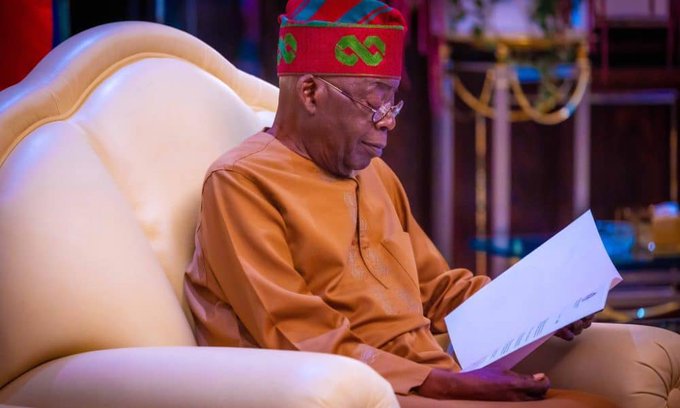


The Nigerian Bar Association, NBA, has said President Bola Tinubu lacks the constitutional authority to amend or override the Petroleum Industry Act, PIA, through an executive order.
NBA President Afam Osigwe (SAN) spoke on Monday amid controversy over Executive Order 9, which halted revenue deductions by the Nigerian National Petroleum Company Limited, NNPCL, and other agencies before remittance to the Federation Account.
“No, he does not. A president cannot, by executive order, modify or alter a law. A president doesn’t have the power,” Osigwe said in an interview.
The Presidency defended the directive, claiming it is anchored on sections 5 and 44(3) of the 1999 Constitution and is aimed at restoring revenues constitutionally due to the Federal, State and Local Governments. Presidential spokesman Bayo Onanuga insisted that the PIA “is not superior to our constitution” and said the order seeks to stop deductions that allegedly undermine constitutional revenue provisions.
However, senior advocates faulted this position, stressing that only the National Assembly can amend an Act, and only the courts can declare a law unconstitutional.
Senior Advocate of Nigeria Lekan Ojo said, “Where the law has prescribed a particular thing, the President cannot, by executive order, do the opposite. So, the President does not have the power and cannot use an executive order to amend provisions of the Petroleum Industry Act.”
Paul Obi (SAN) added, “No, the president does not have the power to overrule or overreach an Act of Parliament through executive orders. The Constitution clearly separates the powers of the executive, legislature and judiciary.”
Wale Balogun (SAN) noted that an executive order is a subsidiary instrument and “must be traceable to the law at all times,” stressing that inferior legislation cannot override a substantive Act of Parliament.
Dr Wahab Shittu (SAN) said while the Constitution renders inconsistent laws void, the determination of such inconsistency rests with the judiciary. “It is not left to the subjective discretion of the executive. Executive orders cannot override, amend or repeal provisions of an Act of the National Assembly,” he said.
Similarly, Dr Abiodun Layonu (SAN) said, “The moment an Executive Order contradicts the law, it becomes null and void to the extent of the inconsistency with the law.”
The PIA, signed in 2021 by former President Muhammadu Buhari, grants NNPCL operational and financial autonomy, including the right to retain certain revenues for reinvestment before remitting proceeds to the Federation Account.
While some in the private sector support the executive order as a transparency measure, the NBA and several senior advocates insist any alteration of the Act must come through legislative amendment or judicial pronouncement.
Titilope Adako is a talented and intrepid journalist, dedicated to shedding light on the untold stories of Osun State and Nigeria. Through incisive reporting, she tackles a broad spectrum of topics, from politics and social justice to culture and entertainment, with a commitment to accuracy, empathy, and inspiring positive change.