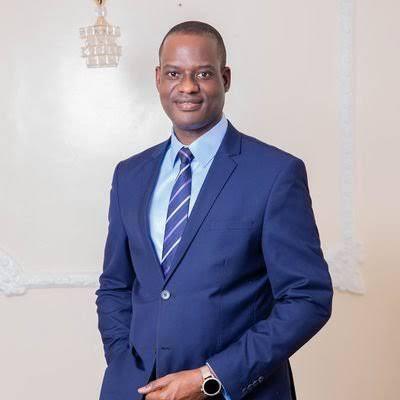
Editorial: Taiwo Oyedele’s Appointment: Beyond the Title, Structure Matters


Highlights
- The appointment of Taiwo Oyedele should be used as an opportunity to undertake a structural reform of Nigeria’s public finance system.
- A new framework should signal a clear shift in thinking. Nigeria must move away from the debilitating rentier state towards a proper federal system anchored on production as the primary driver of revenue and economic growth.
- Taiwo Oyedele possesses the necessary curriculum vitae and professional competence. However, the country must avoid turning the appointment into another round of musical chairs in government. It must not become another “cometh the man” narrative. Rather, it should form part of a deliberate redefinition of the operating model of the nation’s public finances.
The recent nomination of Mr Taiwo Oyedele for a ministerial appointment has once again drawn attention to the increasingly predictable process of confirmation in the Nigerian Senate. The familiar ritual of “take a bow and go” has become so entrenched that few now expect any meaningful scrutiny of nominees. What ought to be a rigorous legislative process involving careful examination and cross-examination to ascertain competence and suitability has gradually become a ceremonial exercise. This dereliction of duty carries consequences for governance, yet it has regrettably become the operating norm.
Mr Taiwo Oyedele arrives with credentials that stand out in Nigeria’s public policy landscape. Over the years, he has built a strong reputation in the front ranks of international professional services, demonstrating expertise that goes beyond the confines of local practice. In recent years, he has also played a significant role in placing the question of Nigeria’s tax system firmly in the centre of national debate. By doing so, he has helped elevate a conversation that Nigeria can no longer postpone.
The discussions around tax reforms have inevitably generated controversy. Yet beneath the disagreements lies an emerging consensus that Nigeria must gradually move away from a parasitic system of socio-economic relationships that relies heavily on rent extraction rather than productivity. The new direction being contemplated is one anchored on production, where economic output generates sustainable revenue streams capable of supporting development. In such a framework, higher revenues translate into shared prosperity, which in turn forms the foundation of a stable and enduring democratic order.
Within this evolving policy environment, an important question arises. What precisely will be the role of Mr Oyedele as Minister of State for Finance? Given both his professional strengths and the difficult fiscal situation confronting Nigeria, clarity about his remit is essential. His appointment should not merely add another layer to the bureaucratic hierarchy. Rather, it should serve as an opportunity to rethink and restructure the operational architecture of the Ministry of Finance itself.
One option worth serious consideration is the revival, at least in functional terms, of the role once known as the Financial Secretary to the Government. Though not constitutionally mandated such a position could provide the structural clarity needed for effective financial governance. Several influential roles in modern governments are not constitutionally defined yet remain central to administration. The office of Chief of Staff in the United States is one such example. A designation similar to Financial Secretary would therefore help clarify responsibilities, elevate institutional focus and signal a serious commitment to fiscal discipline.
Historically, the position of Financial Secretary played a crucial role during the colonial period, particularly before the establishment of a central Minister of Finance. The office functioned as the nerve centre of public finance, overseeing government spending, ensuring internal controls and enforcing due process in public expenditure. The last occupant of this office in Nigeria was Hugh Foot, later Lord Caradon, a member of the distinguished Foot family in Britain. His relatives included Sir Dingle Foot, who served as counsel during the 1962 treasonable felony trial of Chief Obafemi Awolowo, and Michael Foot, who later led the British Labour Party and served as Leader of the Opposition in the House of Commons. The significance of this reference lies not in nostalgia but in understanding how pivotal the office once was in shaping fiscal discipline.
Even the United Kingdom has retained a version of this structure in the modern era. The Financial Secretary to the Treasury remains a junior ministerial role within government, assisting the Chancellor of the Exchequer with financial management, tax policy and public administration. The position often attends cabinet meetings and functions as an important coordinating figure within the Treasury system. Such a framework illustrates how careful institutional design can strengthen fiscal governance and ensure coherence in financial policy.
In Nigeria’s context, a modern equivalent of this role could become the engine room for revenue mobilisation and fiscal discipline. The remit of the person functioning, if not in name but in effect, as the Financial Secretary would not only be to bring in and aggregate revenues but also to streamline the process of public spending. The country must move away from the present fraud-propelled system and replace it with a Performance Planning Budget System. Such a model was briefly attempted during the final months of the Shehu Shagari administration when the late Omowale Kaye served as Director of the Budget. Unfortunately, the military intervention that followed abruptly terminated the initiative. The idea deserves serious reconsideration today.
Nigeria’s budget process is currently hampered by a structural imbalance. Revenue generation remains inadequate to sustain even modest capital expenditure targets. This is incompatible with any rational development strategy. If Nigeria is to create millions of sustainable jobs and address its expanding demographic pressures, capital spending must grow significantly. Such expansion, however, cannot occur without a robust system for generating and managing revenue. A revitalised financial coordination structure led by a figure with the competence and vision of Mr Oyedele could play an important role in achieving this objective.
Encouragingly, Nigeria appears to be moving, however slowly, towards a new economic orientation. There is a growing recognition that the rentier model built on the distribution of oil revenues is no longer sustainable. The shift towards a production-driven economy supported by improved revenue frameworks and institutional reforms offers the possibility of shared prosperity and long-term democratic stability. This broader shift is also reflected in other structural debates, including the increasing acceptance of the need to devolve elements of the internal security framework in order to improve effectiveness and accountability.
Ultimately, the significance of Mr Oyedele’s appointment lies not only in the individual but in the structure that will define his responsibilities. Appointments without institutional clarity often waste talent rather than harness it. If Nigeria is serious about fiscal reform and economic transformation, it must ensure that capable individuals are supported by well-designed institutional frameworks. The challenge before the government, therefore, is not simply to confirm the nominee but to define the structure through which his expertise can be fully deployed in the service of national development.