Boko Haram, ISWAP Fighters Hold Eid Prayers With Rifles in Borno
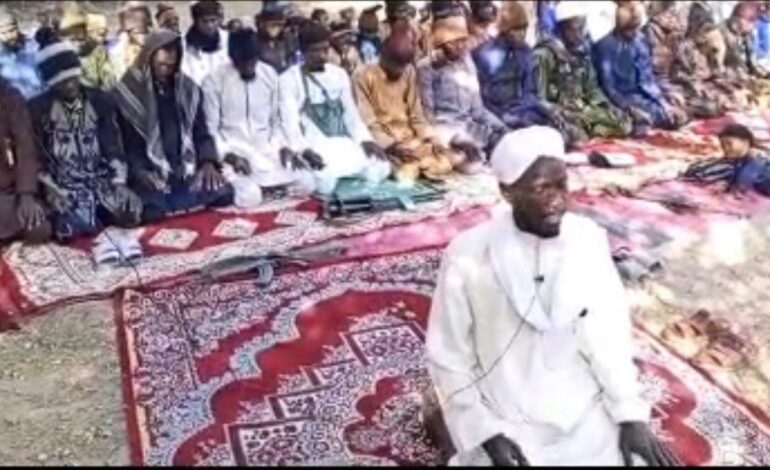


Fresh footage has shown hundreds of Boko Haram and Islamic State West Africa Province, ISWAP, fighters gathering in Borno State for Eid prayers while openly carrying assault rifles and other sophisticated weapons, raising fresh concerns over insecurity in Nigeria’s North-East.
The clips, released on Saturday by propaganda platform AZ-ZALLAQA, captured the armed insurgents lined up in large formations at what appeared to be an Eid prayer ground in Borno, observing congregational prayers with AK-47 rifles and other weapons in full display.
The development has stirred fear among residents and drawn concern from security watchers, who say the scene highlights the continued operational strength of the terror groups despite repeated assurances that insurgency has been largely subdued.
Eid is traditionally a major Islamic celebration observed after Ramadan, a holy month of fasting, prayer and reflection, and is usually associated with peace, charity and communal worship.
But the sight of heavily armed insurgents conducting Eid prayers in the open has added to growing worries about the security situation in Borno, which has remained the centre of insurgent violence in Nigeria for more than a decade.
Boko Haram and ISWAP have continued to launch attacks across Borno and neighbouring states, killing civilians, abducting residents and displacing millions from their communities.
The footage also comes days after deadly explosions hit Maiduguri, the Borno State capital, on March 16.
The blasts struck crowded civilian areas, including the entrance of the University of Maiduguri Teaching Hospital, Monday Market and a central post office, during the evening period when many residents were breaking their Ramadan fast or heading home.
Reports said at least 26 people were killed, while more than 100 others were injured, though some later estimates suggested a higher death toll.
Hospitals in the city were said to have been overwhelmed as victims were rushed in for treatment, while eyewitnesses described chaotic scenes in the aftermath of the attacks.
The bombings, believed to have been carried out by suicide bombers targeting crowded public places, reflected a familiar pattern of insurgent attacks in the region and further challenged claims that the groups had been fully weakened.
Titilope Adako is a talented and intrepid journalist, dedicated to shedding light on the untold stories of Osun State and Nigeria. Through incisive reporting, she tackles a broad spectrum of topics, from politics and social justice to culture and entertainment, with a commitment to accuracy, empathy, and inspiring positive change.