EDITORIAL: A Questionable Loan And The Spin Doctors
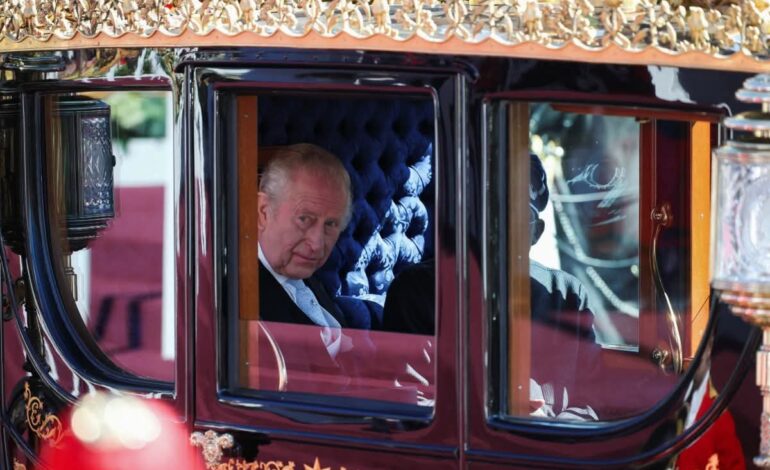


The spin doctors have had quite a week trying to sell President Tinubu’s state visit to Britain as a diplomatic and economic triumph. But beyond the pomp, pageantry and polished photo opportunities lies a far less flattering reality: a questionable loan, an unequal bargain, and yet another reminder that in the post-colonial order, Nigeria is too often treated not as a genuine partner, but as a market to be exploited.
The visit itself exposed more than government handlers intended. Beneath the royal ceremony was a familiar pattern of relationship: patron and client, charm replacing coercion, but the outcome remaining much the same. Britain no longer needs gunboats to advance its interests. It has diplomacy, finance and elite influence. Last week, it used them effectively.
At the heart of the controversy is the £746 million loan for the refurbishment of two ports in Lagos. Government apologists want Nigerians to see this as a major infrastructure breakthrough. But the fine print suggests otherwise. This is not a gift. It is a commercial arrangement structured to serve British interests first.
The reported terms are revealing. At least 20 per cent of the contracts must be sourced from the United Kingdom. In addition, £236 million of supplier contracts will go directly to British firms, with £70 million specifically earmarked for British steel. In plain language, Nigeria is borrowing money only to send a large portion of it straight back into the British economy.
So who wins? British banks win. British steel manufacturers win. British exporters win. British insurers and professional service firms win. Nigeria gets the debt.
That is the real issue. The problem is not only that the interest rate remains undisclosed, though that alone should concern every serious observer. The deeper problem is that the structure of the deal appears designed to stimulate British industry while leaving Nigerians with the burden of repayment. This is economic diplomacy in its most self-interested form. Britain is acting in its own interest, as strong states do. The real indictment is of Nigerian leadership, which so often enters such arrangements without the same clarity, strategy or self-respect.
Even the case for the project itself is weak. Yes, ports matter. But Apapa is not a deep-sea port and cannot accommodate the largest vessels that increasingly define modern maritime trade. If Nigeria is truly thinking about long-term competitiveness, efficiency and future trade capacity, then the priority should be the development of deep-sea ports, not the costly refurbishment of infrastructure whose strategic value may already be limited.
There are also troubling questions about transparency. Public discussion around the deal has raised concerns that politically connected interests may already be positioned to benefit, without convincing evidence of a transparent procurement process. Nigerians have seen this pattern before, including in the controversy surrounding the Lagos-Calabar Coastal Road. It reinforces the perception that the country is drifting deeper into state capture, where public policy serves private interests rather than the national good.
This is why the work of the spin doctors is so dangerous. Their job is not merely to defend government decisions, but to blur reality: to present debt as development, dependency as partnership, and elite convenience as national progress. They seek to persuade Nigerians that a loan heavily tilted toward foreign lenders and suppliers should be celebrated as a win.
But facts are stubborn. If Nigeria borrows on unfavourable terms, channels a significant part of the money back to British firms, neglects more strategic infrastructure priorities, and leaves serious procurement questions unanswered, then this is not a victory. It is vulnerability dressed up as achievement.
Britain has done what nations that understand their interests do: use public policy to support its banks, industries, exporters and workers. The real problem is that Nigeria appears willing to incur public debt in ways that chiefly strengthen another country’s economy while ordinary Nigerians carry the cost.
Nigerians should not be dazzled by ceremony. A red-carpet reception is not development. Royal warmth is not economic strategy. And a loan designed to favour foreign industry is not a national success because government propagandists say so.
If this is the deal, then it deserves scrutiny, not applause; debate, not choreography; and truth, not spin.
Related posts:
 2023: We Won’t Accept Questionable Votes From Inaccessible Areas, Ayu Tells Federal Govt
 UNIOSUNTH Investigates Patient’s Death In Questionable Circumstances
 Quality Of Bread, Others Now Questionable – NAFDAC
 I Earn N750,000 Salary, Yet People Compare Me With Politicians of Questionable Wealth – Ndume