EDITORIAL: The Crisis Of Affordability
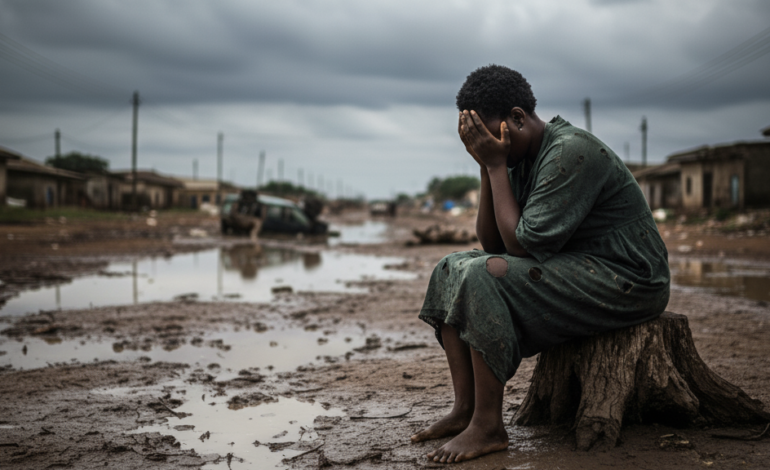


“Are you better of today….?” A spectre haunts Nigeria today, this is the devastating effect of a punitive cost-of-existence crisis. Even before the crisis in the Middle-East Nigerians have been up and against a cruel reality. And it’s getting worse. The current economic situation is as a result of structural dysfunction and the ineptitude of the response of the government.
The responses so far have been ad-hoc and sometimes opportunistic. For example, a ridiculous palliatives economy “ has become entrenched.This is utterly ridiculous for palliatives can hardly be described as an economic model. It portrays utter in ineptitude and intellectual indolence.
Unfortunately it will be a herculean task to find the political will to dismantle it; nevertheless for the sake of social stability and the endurance of our democracy it has to be dismantled. Palliatives cannot replace a programme based on inclusive stainable development leading to a better life for all.
Nigeria therefore needs a programme of economic regeneration or with full acknowledgement to a formal governor of Osun State Rauf Aregbesola an “alternative perspective” this must be put on offer to the Nigerian people to give them hope in the face of the declining living standards.
The need for an alternative makes us to recall the game changing words of the Bill Clintons brilliant political strategies Jim Carville when Clinton ran against the then incumbent President, George Bush.
Clinton an unknown Governor of a back water state was way behind the incumbent president in the polls and a conversional wisdom had already called the election for President George Bush.
There was a feeling of despair in the camp of the then opposition Democratic Party that it was all over bar the shouting. At this crucial junction Jim Carville turned it all upside down. He unexpectedly won the election for Clinton by asking the question “Are you better off today than you were?”
The Republicans were stumped and could not find an adequate response to the question posed Carville in a remarkable feat of contemporary political history had astonishingly snatched victory from the jaws of certain defeat.
Jim Caville’s repose must be replicated in Nigeria today. The key question for those offering an alternative perspective must be centred around “Are you better off?” Even the most dishonest
Propagandist will find it difficult to respond. No amount of doctoring of statistics can hide the fact that for the overwhelming majority of Nigerians existence is now a punitive reality more like a recurring nightmare. It’s so bad that the amount of people’s dropping out of school is now more than alarming. Food is now been rationed in many homes, students are trekking to school and back, and very dangerously people are now skipping their prescribed intake of medicine.
Across the country pharmacists instinctively know that their customers are in the face of declining purchasing power are not taking the recommended dosage, not because they want to harm themselves but simply because they cannot afford it. The situation is daunting across the board, with tenants facing landlords who also want to maintain their living standards by increasing rents.
An alternative position must be based on shoring up declining living standards not by using the illusion of palliatives but by the production of an economic programme which will turn a war on poverty into a vehicle to achieve sustainable development. We have seen this such of developmental thrust used to beneficial effect in places such as India, Brazil, Thailand, Malaysia amongst other countries.
Such a programme must use all the creative tools of the old and new media appeal as well as offer solutions to the debilitating needs of segmented groups such as The subsistence farmers in the rural economy, the informal sector also known as the holloi-polloi in the urban areas, the market and the traders, students as well as the generally disposed across the board.
There have all been unfairly very hard hit. For example the response to the description of the rural economy must be a programme of rural reconstruction resembling the Integrated Rural Development Policy put forward by the defunct Unity Party of Nigeria (UPN) in 1978.
The policy should be based on the inducement of private sector led or public and private sector Commodity Exchanges. This will use mechanism such as Guaranteed Minimum Farm Gate pricing mechanism to assure subsistence farmers of fair pricing which will then led to increased productivity and output.
This will increase their purchasing power. The provision of storage facilities including Solar powered refrigerated storage will also cut post-harvest losses which has been a disincentive to production and a stumbling block to the emergence of much needed food processing manufacturing plants.
Food processing manufacturing plants when they emerge as a result of this provide hundreds of thousands of sustainable jobs in the industrial estates.
For the urban markets they should also be refrigerated, warehouse spaces using solar energy to help to prevent wastages and in doing so will bring down the prices of perishable commodity to the customers.
An alternative perspective on the lines suggested above will be a very table game-changer in the electoral calculus.
Across the board, a revigorating pro-people position has to be taken in order to preserve Nigerians democracy. Emphasis must be placed on the devolution of the function of the state in order to create a proper federal structure for example the deteriorating cannot be tackled without the devolving the internal state security mechanism to the community level.
Nigeria needs urgently to be addressed with a programme of reconstruction based on an alternative perspective to the current sham!