Tinubu Confesses To Scattering Opposition Parties
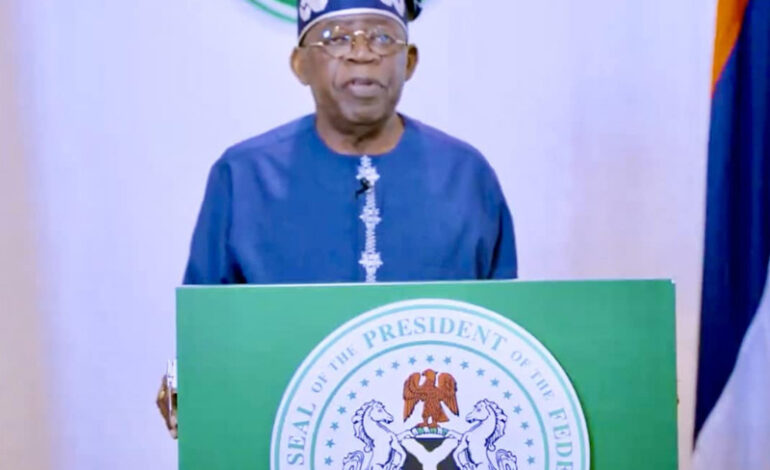


President Bola Tinubu has stirred fresh political reactions after joking about deploying Senate President Godswill Akpabio to destabilise opposition parties.
Speaking on Tuesday during the inauguration of the Nigeria Revenue Service (NRS) headquarters in Abuja, Tinubu, in a light-hearted remark, suggested sending Akpabio to the opposition camp to “scatter them.”
“Senate President, I will send you to the other side to represent me. And then you can scatter them any way you want. They’re confused!” Tinubu said, drawing laughter from the audience.
However, beyond the humour, the President’s comment appears to echo a growing narrative among opposition parties, who have repeatedly accused his administration of fueling internal crises within their ranks.
OSUN DEFENDER reports that since the inception of Tinubu’s administration, opposition parties have been embroiled in one crisis after another, ranging from leadership tussles to defections and factional disputes. Several key opposition figures have openly pointed accusing fingers at the presidency, alleging deliberate interference in their internal affairs.
They claim that the ruling party, under Tinubu’s leadership, has been working behind the scenes to weaken opposition structures by sponsoring divisions, encouraging defections, and exploiting existing cracks within party hierarchies.
Some opposition leaders have also alleged that state institutions are being subtly deployed to frustrate their activities, while influential members are being lured or pressured into aligning with the ruling establishment.
These allegations, though consistently denied by allies of the President, have continued to dominate political discourse, especially as the country gradually approaches another election cycle.
Political analysts note that whether strategic or coincidental, the persistent instability within opposition parties has significantly altered Nigeria’s political landscape, leaving many of them struggling to present a united front against the ruling party.
Hafsoh Isiaq is a graduate of Linguistics. An avid writer committed to creative, high-quality research and news reportage. She has considerable experience in writing and reporting across a variety of platforms including print and online.
Related posts:
 INEC Chairman, Tinubu Blocking Opposition From Registering New Parties – Amaechi
 Tambuwal Accuses Tinubu Of Destabilising Opposition Parties
 Opposition Parties Responsible For Rising Insecurity To Make Tinubu Look Incompetent – Ex-Osun Amotekun Chair
 Group Berates Osun Opposition Parties For Questioning Osun Governorship Election Declaration