Pope Leo Apologises For Catholic Church’s Role In Slavery
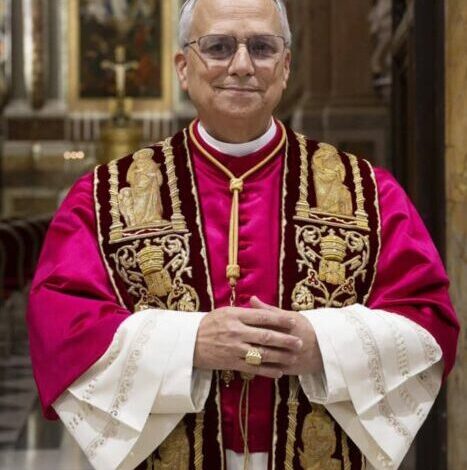


Pope Leo XIV has issued a historic apology for the Catholic Church’s delayed condemnation of slavery, acknowledging that past popes and the Holy See authorised forms of subjugation and enslavement during the colonial era.
The apology was contained in the Pope’s first encyclical, titled Magnifica Humanitas, released on Monday.
In the document, the pontiff admitted that the Vatican’s historical role in legitimising slavery remains a painful chapter in Christian history.
“Already in the early modern period, the Apostolic See of Rome, responding to the requests of sovereigns, intervened several times in order to regulate and legitimise forms of subjugation, and, in certain cases, including the enslavement of ‘infidels,’” Pope Leo XIV wrote.
While noting that historical events should not be judged solely by modern standards, the Pope insisted that the Church’s delay in openly condemning slavery could not be ignored or minimised.
“Yet neither can we deny or diminish the delay with which both society and the Church came to denounce the scourge of slavery,” he stated.
He added that although the Church had always affirmed the dignity of every human being, it took nearly 18 centuries before slavery was fully recognised as incompatible with Christian teaching.
The encyclical also highlighted that Pope Leo XIII was the first pope to explicitly condemn slavery in 1888, decades after many countries had already abolished the practice.
Pope Leo XIV further acknowledged that Church institutions themselves once owned slaves before the formal condemnation was issued.
The encyclical also addressed concerns over the protection of human dignity in an era increasingly shaped by artificial intelligence.
Titilope Adako is a talented and intrepid journalist, dedicated to shedding light on the untold stories of Osun State and Nigeria. Through incisive reporting, she tackles a broad spectrum of topics, from politics and social justice to culture and entertainment, with a commitment to accuracy, empathy, and inspiring positive change.