AAC Slams Soludo Over Onitsha Market Closure, Says Decision Punishes Traders
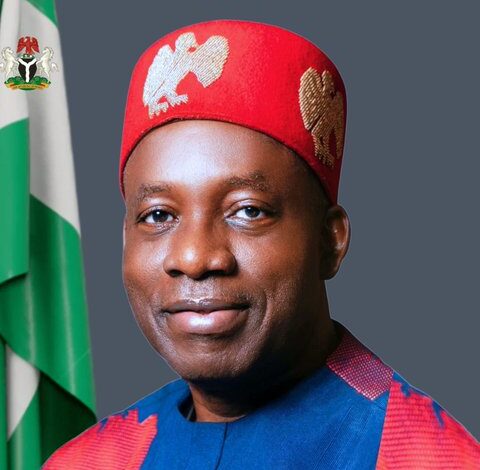


The Anambra State chapter of the African Action Congress has criticised the state government’s handling of security, faulting the closure of Onitsha Main Market and warning that the decision places the burden of insecurity on traders rather than addressing its root causes.
The party said the shutdown reflects a growing disconnect between government policies and the daily realities of citizens who depend on commercial activities for survival.
In a statement issued on Monday, the AAC State Publicity Secretary, Chinedu Anthony, condemned the directive by Governor Chukwuma Soludo to close the market.
He said the decision failed to consider the economic and social consequences for residents whose livelihoods depend on daily trade.
According to the party, the timing and manner of the announcement showed a pattern of governance that prioritises control measures over inclusive and sustainable security solutions.
Anthony described the closure as unjustifiable, arguing that it was counterproductive for a government to disrupt lawful economic activity in response to security challenges.
He said the move effectively punished citizens for failures that fall squarely within the responsibility of the state.
“This decision, announced without adequate consideration for the welfare of traders and residents, is unacceptable and tone-deaf to the security situation,” the statement read.
“We question the logic behind closing businesses, thereby exposing vulnerable citizens to greater risks, when the state should be prioritising security.”
The AAC also highlighted what it described as unequal security experiences across social classes.
It noted that while political office holders enjoy heavy protection, ordinary citizens are left exposed.
“While politicians move around with armed escorts, the common man is left to navigate life’s challenges without adequate protection,” the party said.
“Is it fair to punish traders for the state’s security lapses?”
The party argued that shutting down markets neither deters criminal activity nor improves public safety.
It insisted that effective security requires proactive policing and collaboration with local communities rather than economic shutdowns.
“Governor Soludo should focus on addressing insecurity rather than jeopardising livelihoods,” the AAC said.
“Closing markets won’t solve crime. Effective policing and community engagement will.”
Reaffirming its stance, the party declared its support for traders and residents affected by the closure.
“We stand with traders and residents. Their welfare matters,” it added.
Meanwhile, the state government had earlier ordered the immediate closure of Onitsha Main Market for one week.
The decision followed the refusal of traders to open for business on Monday, despite the government’s directive abolishing the sit-at-home practice.
The development was disclosed in a statement by the Governor’s Chief Press Secretary, Christian Aburime.
He said the action was taken in response to what the government described as continued defiance by market leaders and traders.
Onitsha Main Market, one of the largest commercial centres in West Africa, has been central to the Soludo administration’s push to end the long-standing Monday sit-at-home tradition in the South-East.
Aburime said the shutdown was more than an administrative penalty.
He described it as part of broader efforts to reclaim Mondays as normal business days and restore economic activities across the state.
Governor Soludo was quoted as saying the government would not tolerate actions capable of undermining its efforts to restore normalcy.
“The government cannot stand by while a few individuals wilfully undermine public safety and disregard official directives meant to restore normalcy,” he said.
“This is plain economic sabotage. We are not going to allow this.”
The governor warned that stiffer sanctions would follow if the market failed to reopen after the one-week closure.
“If the market does not reopen for business after this one-week shutdown, it will be sealed for a month. And so on and so forth,” Soludo added.
Sodiq Yusuf is a trained media practitioner and journalist with considerable years of experience in print, broadcast, and digital journalism. His interests cover a wide range of causes in politics, governance, sports, community development, and good governance.