Court Fines Fidelity Bank For Deducting COVID-19 Loan From Customer’s Bank Account


- Issues Perpetual Injunction Against Bank
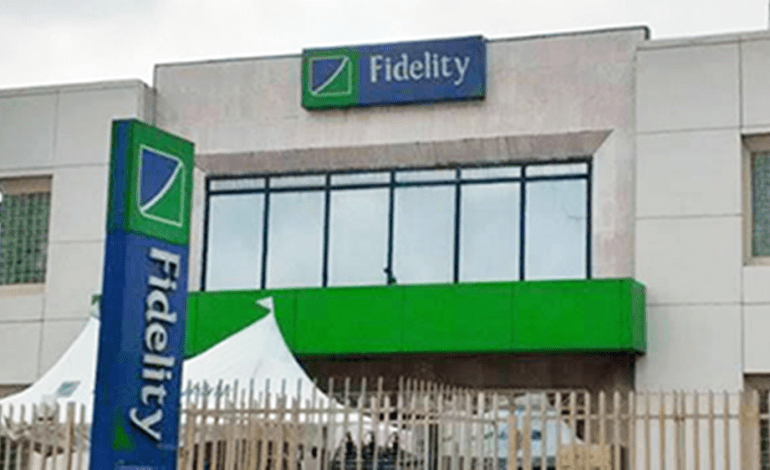
A Lagos State High Court has issued a N2 million fine against Fidelity Bank for deducting the sum of eleven thousand, nine hundred and twenty-two naira, forty-one Kobo from a customer account as loan repayment to NIRSA Microfinance Bank.
The customer, Esther Agboola, who is a student, had in an application dated April 22, 2025, through her lawyer, Muhib Owodunni, who held the brief of Olumide Babalola, claimed that the bank on April 19, 2025, unlawfully deducted her money, adding that she never took a loan from any financial institution.
The plaintiff claimed all her efforts to let the bank know she never took a loan from NIRSA Microfinance Bank proved abortive.
She sought among others, a declaration that Fidelity Bank’s processing of her account number for an automatic loan recovery was misleading and inaccurate.
The plaintiff also sought a perpetual injunction restraining the respondent from further processing her bank account for the said automatic loan recovery.
She asked for general damage of N50 million as well as a post-judicial interest on the money the bank deducted from her account.
Agboola averred that by the respondent’s breach of her privacy and data subject’s right, she suffered a denial of access to her funds, untold hardship at the law school and mental depression due to the loss of her money.
But the respondent counsel, Oluseyi Olukoga, during the course of the proceedings, argued that the applicant obtained a loan from NIRSAL Microfinance Bank and by the agreed terms and conditions of the loan known only to the applicant and NIRSAL Microfinance Bank, a Global Standing Instruction (GSI) was triggered by the Nigerian Inter-Bank Settlement System (NIBSS) on bank accounts linked to the applicant for repayment purposes.
The lawyer said the debit alert notification from the respondent with narration “SIRecovery” shows there
was an automated loan recovery of the sum of N11,922.41 in line with Global Standing
Instruction (GSI) towards the settlement of Agboola’s debt with NIRSAL Microfinance Bank.
He added that Fidelity Bank was not wrong to have debited the applicant’s account with the sum of N11,922.41 automatically and the respondent did not violate Agboola’s right to privacy.
In his judgment dated February 12, 2026, Justice A. Ipaye, said, “Having carefully reviewed the Originating Application, Affidavits, Exhibits and Written Addresses of Counsel, this Court is of the view that the issues formulated by the Applicant can be conveniently compressed into the following issues: Whether the Respondent’s disclosure, processing and use of the Applicant’s bank Account details for the purpose of an automatic loan recovery constituted an interference with the Applicant’s right to privacy guaranteed under Section 37 of the Constitution.
“Whether the Respondent’s processing of the applicant’s personal and financial data complied with the principles of fairness, accuracy and lawfulness under Sections 24 and 25 of the Nigeria Data Protection Act 2023.
“Whether, in the circumstances of this case, the Applicant is entitled to the declaratory,
injunctive and monetary reliefs sought.”
The court held that protection of personal data is part of the constitutional right to privacy, adding that the respondent failed to show any loan agreement, GSI mandate and proof of the Applicant’s digital execution.
Justice Ipaye said in the absence of proof of any mandate or loan obligation traceable to the applicant, the respondent’s permission of the applicant’s financial data and funds to be used for the benefit of a third party without lawful justification, constitutes an unjustified intrusion and therefore an interference with her right to privacy.
The judge said, “Having found that the Applicant’s constitutional and statutory rights were violated, the claimant is entitled to the reliefs claimed excluding the pre-judgment interest which is declined there being no contractual or statutory basis established.
“However, post-judgment interest shall accrue at the rate of 10% per annum on the judgment sum until full liquidation.”
On the applicant’s claim for N50,000,000 as general damages, the court held that, “damages in fundamental rights
cases must be compensatory and not punitive. Considering the nature of the breach, the hardship occasioned to the applicant, and the need for proportionality, this Court is of the view that the sum of N50,000,000.00 is not proportional to the hardship occasioned by the applicant and the same will therefore be reduced accordingly.
“It is declared that the respondent’s exposure, disclosure and processing of the applicant’s bank account details for the purpose of offsetting an alleged loan constitutes a violation of the applicant’s right to privacy.”
The court granted an order of perpetual injunction restraining the respondent from further processing the applicant’s bank account for an automatic loan recovery in respect of the alleged loan.
It also ordered that “the respondent shall immediately refund the sumof A11,922.41 to the Applicant. The cost of N300,000.00 is awarded in favour of the Applicant.
“It further ordered that the respondent shall pay the sum of N2,000,000.00 as general damages to the applicant. It also ordered that post-judgment interest shall accrue at 10% per annum on the total judgment sum until full and final liquidation.”
OSUN DEFENDER reports that several Nigerians have been receiving debit alerts from their banks over loans obtained from the Central Bank of Nigeria during the COVID-19 lockdown as a way of cushioning the effect of the pandemic.
Olamilekan Adigun is a graduate of Mass Communication with years of experience in journalism embedded in uncovering human interest stories. He also prioritises accuracy and factual reportage of issues.