Dangote Refinery Denies Importing Finished Petroleum Products
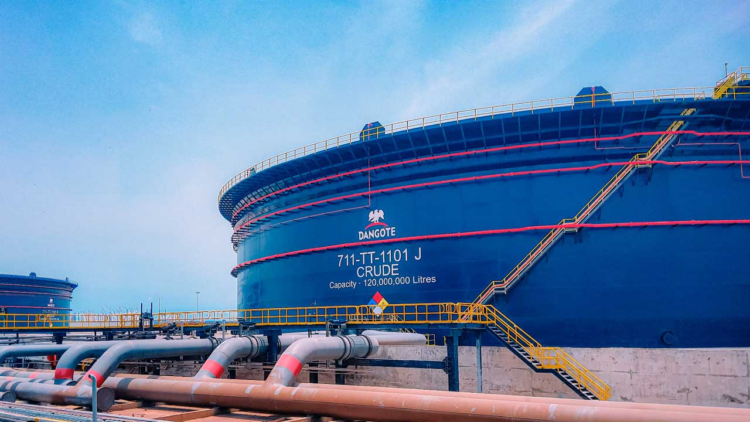


Dangote Petroleum Refinery and Petrochemicals (DPRP) has denied reports that it imports finished petroleum products, describing the claims as incorrect and based on a misunderstanding of how modern refineries operate.
The company’s Chief Executive Officer, David Bird, explained its processes and standards at a media briefing.
The company stated that it refines crude oil and also processes intermediate feedstocks into premium petroleum products and petrochemicals that meet international quality standards.
Bird explained that the processing of intermediate or semi-processed materials is common practice in the global refining industry and should not be mistaken for importing finished fuel.
He said the Dangote Petroleum Refinery operates a European and Asian merchant refinery model, combining advanced refining, blending and trading systems designed to meet modern environmental and quality requirements.
“DPRP produces high quality fuels aligned with international environmental and health standards. Our gasoline is lead free and MMT free with 50 parts per million sulphur, while our diesel meets ultra low sulphur specifications. These standards help reduce emissions, protect engines and safeguard public health,” Bird said.
While displaying samples of intermediate feedstocks and refined products, Bird maintained that the refinery releases only fully refined, market-ready fuels, noting that semi-finished products are unsuitable for vehicles and are not supplied to the Nigerian market.
He added that the refinery was established to end the long-standing problem of substandard fuel in Nigeria by supplying products that meet strict global standards.
According to him, DPRP products are now exported to international markets, reflecting their quality and competitiveness.
Bird explained that intermediate materials such as naphtha, straight-run gas oil, vacuum gas oil, reformate, alkylate and isomerate are commonly used as feedstock for further refining into petrol, diesel and petrochemicals.
He emphasised the refinery’s commitment to transparency in its dealings with regulators and urged the media to clearly explain the difference between intermediate products and finished fuel to the public.
“It is unfortunate that some individuals are deliberately spreading misleading narratives about a refinery that has transformed Nigeria and the West African region from a dumping ground for substandard fuels into a hub for high quality products,” he said, adding that the refinery’s flexible design enables it to process different grades of crude oil and intermediate feedstocks into premium fuels.
Bird also assured Nigerians of steady product supply, saying the refinery has helped ease fuel shortages, stabilise the naira and reduce pressure on foreign exchange.
Group Chief Brand and Communications Officer of Dangote Industries Limited, Anthony Chiejina, also called on journalists to use accurate terminology in their reports, warning that imprecise language could mislead the public and trigger unnecessary concern.
Titilope Adako is a talented and intrepid journalist, dedicated to shedding light on the untold stories of Osun State and Nigeria. Through incisive reporting, she tackles a broad spectrum of topics, from politics and social justice to culture and entertainment, with a commitment to accuracy, empathy, and inspiring positive change.