‘Don’t Weaponise Religion’ – African Union Warns US
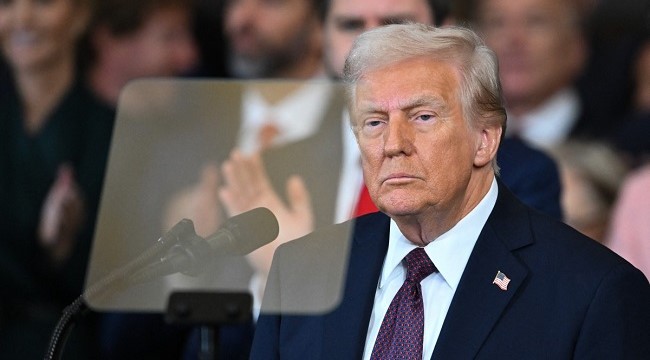

The African Union Commission (AUC) has warned the United States to “not weaponise religion” while cautioning against what it described as baseless allegations and threats of military intervention over alleged persecution of Christians in northern Nigeria.
In a statement released on Saturday via its official X handle, @_AfricanUnion, the Commission reaffirmed its “unwavering commitment” to the principles of sovereignty, non-interference, religious freedom, and the rule of law as enshrined in the AU Constitutive Act.
The AUC said it was “concerned” by recent remarks from the United States suggesting that the Nigerian government was complicit in the alleged killing of Christians and warning of possible military action.
“The Federal Republic of Nigeria is a longstanding and valued Member State of the African Union, playing a key role in regional stability, counter-terrorism, peacekeeping initiatives, and continental integration,” the Commission said.
It added that Nigeria’s sovereignty must be fully respected and that any engagement with the country should adhere to diplomatic norms rather than threats of force.
“The AUC fully respects Nigeria’s sovereign right to manage its internal affairs, including security, religious freedom, and human rights, in line with its Constitution and international obligations. Any external engagement must respect Nigeria’s sovereignty, territorial integrity, and unity,” the statement read.
The Commission expressed support for the Nigerian government’s repeated position that its Constitution guarantees freedom of religion and belief, and that it “rejects all forms of religious persecution.”
It also acknowledged Nigeria’s complex security situation, citing the activities of violent extremist groups, bandits, and communal militias affecting citizens of all faiths.
“The Commission supports Nigeria’s repeated affirmation that its Constitution guarantees freedom of religion and belief and that the Government rejects all forms of religious persecution.
“Nigeria faces complex security challenges affecting citizens of all faiths, including violent extremist groups, banditry, communal violence, and resource-based conflicts,” it stated.
“The AUC calls for regional and international cooperation to support Nigeria and other African countries in strengthening their capacity to respond to insecurity, protect all citizens, uphold human rights, and bring perpetrators of violence to justice.”
In what appeared to be a direct response to Washington, the AUC warned against narratives that “weaponise religion” or “oversimplify security challenges,” saying such rhetoric risks inflaming tensions and undermining peace efforts.
“The AUC rejects any narrative that weaponises religion or oversimplifies security challenges. Conflating all violence with a single religious-target narrative may hinder effective solutions and destabilize communities,” it said.
The Commission further urged the United States and other external partners to engage Nigeria through dialogue, intelligence-sharing, and capacity-building rather than threats of military intervention.
“AUC urges external partners, including the United States, to engage Nigeria through diplomatic dialogue, intelligence-sharing, and capacity-building partnerships, while respecting Nigerian sovereignty rather than resorting to unilateral threats of military intervention, which could undermine continental peace, regional stability, and AU norms for peaceful conflict management,” it added.
The statement concluded with the Commission reiterating its readiness to assist Nigeria through its peace and security framework and other capacity-building programmes, while upholding the AU’s long-standing principle of “African solutions to African problems.”
The U.S. government had in recent weeks made controversial comments accusing Nigeria’s authorities of complicity in the killing of Christians and threatening possible action — remarks that have triggered widespread diplomatic reactions across Africa.
Titilope Adako is a talented and intrepid journalist, dedicated to shedding light on the untold stories of Osun State and Nigeria. Through incisive reporting, she tackles a broad spectrum of topics, from politics and social justice to culture and entertainment, with a commitment to accuracy, empathy, and inspiring positive change.