Editorial: A Democratic Breakthrough in Ibadan
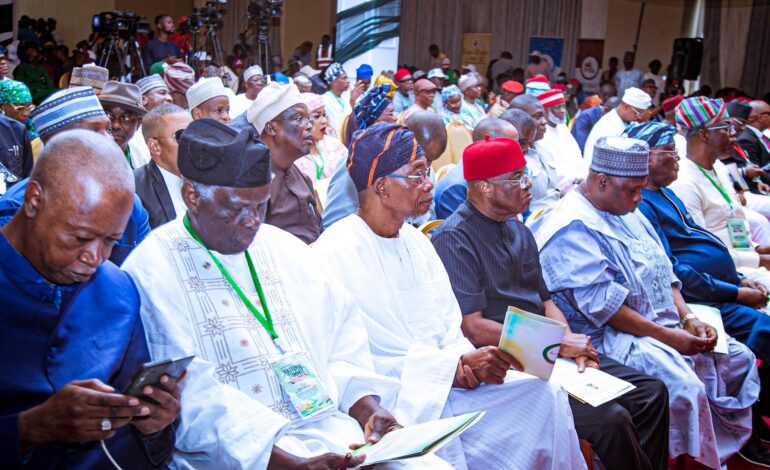


The French philosopher Victor Hugo got it right when he observed that, “All of the armies of the world marching in unison cannot defeat an idea whose time has come.” In Nigeria, the time is long overdue for all those who want to defend the continuity of our democratic system to take a stand. The declaration made by opposition leaders in Ibadan this past Saturday must be heavily applauded. It holds profound historical significance, signaling a resolute fight back against the stealthy dismantling of our democratic institutions.
Ibadan has always been a key element in Nigeria’s political evolution, making it highly appropriate that this declaration was birthed there. Believers in democracy can finally heave a sigh of relief, but they must not become complacent. It is not yet Uhuru; we are still far from the finish line.
Indeed, the choice of Ibadan evokes powerful memories of past struggles for emancipation and political equity in Nigeria. From the tumultuous days of the Western Region crises to the fierce pro-democracy agitations of the 1990s, this city has consistently served as the crucible where democratic resistance is forged. By returning to this historic political bedrock, the opposition has invoked a powerful legacy of defiance against tyranny, reminding the ruling class that the spirit of the people cannot be easily subdued.
The construction of an authoritarian state in Nigeria must be checkmated with great urgency and determination. The consolidation of authoritarianism is entirely predictable; it is always predicated on the subordination of state institutions to an individual, or to vested interests and cabals. This alarming reality is unfolding in Nigeria right now, as the fundamental separation of powers is actively being dismantled.
There is no longer any pretense regarding the independence of our institutions; it is widely accepted as a grim reality that they have been compromised. The word “Independent” in the title of the electoral body, INEC, is now understandably treated as sarcasm, and correctly so. Across the board, vital democratic institutions are systematically being undermined to serve partisan interests.
It is profoundly disturbing that we are not just talking about the subversion of the independence of state institutions; we are also observing the coordinated implosion of the voters’ right to choose from a variety of political parties. This is not surprising. The establishment knows, from its own internal assessments and private polls, that it does not have the genuine support required to win an election, no matter how heavily flawed the process might be.
This institutional decay and political manipulation are not merely abstract issues; they have direct, devastating consequences for the everyday Nigerian. The erosion of democratic checks and balances has paved the way for unchecked economic mismanagement, crippling inflation, and widespread insecurity. When those in power are insulated from accountability by a compromised electoral system, the welfare of the citizenry inevitably becomes an afterthought. The resulting hardship is exactly why this unified opposition must prioritize the economic liberation of the masses.
This is precisely why we have continually advocated for the formation of a unified forum encompassing the entire opposition, and we are thrilled to see it finally taking shape. A united Popular Front will defeat totalitarian ambitions and pave the way for the establishment of a pro-people government driven by Popular Unity. This is the only viable way forward for our nation.
However, for this Popular Front to truly succeed, it must expand its borders beyond career politicians and party stalwarts. True democratic salvation requires an unbreakable alliance with civil society organizations, trade unions, student bodies, and the independent press. These groups have historically been the vanguard of democratic protection in Nigeria, and their active inclusion will lend grassroots credibility and unyielding momentum to the movement.
Furthermore, the coalition faces the monumental task of reawakening a disillusioned electorate. Decades of broken promises and blatantly manipulated elections have bred a dangerous level of voter apathy across the country. The opposition must convince Nigerians that their votes can still count, demonstrating that mass participation is the ultimate antidote to electoral fraud. A mobilized, vigilant populace is far more powerful than any rigged system.
Moving forward, mere rhetoric and condemnation of the ruling class will not suffice. The newly formed alliance must swiftly articulate a coherent, actionable blueprint for governance—a shadow manifesto that clearly outlines how they intend to rescue the economy, secure the nation, and restore the rule of law. Nigerians need a clear vision of what this alternative government represents, beyond simply being the anti-establishment choice.
We congratulate all the patriots who participated in the Ibadan summit on Saturday. However, we issue a strong call for immediate consolidation and extreme vigilance. The anti-democrats will inevitably fight back, employing fifth columnists, state machinery, and agents provocateurs to sow discord. The opposition must remain resolute, united, and intensely focused on the ultimate prize: the reclamation of Nigeria’s democracy.