EDITORIAL: After The Trip
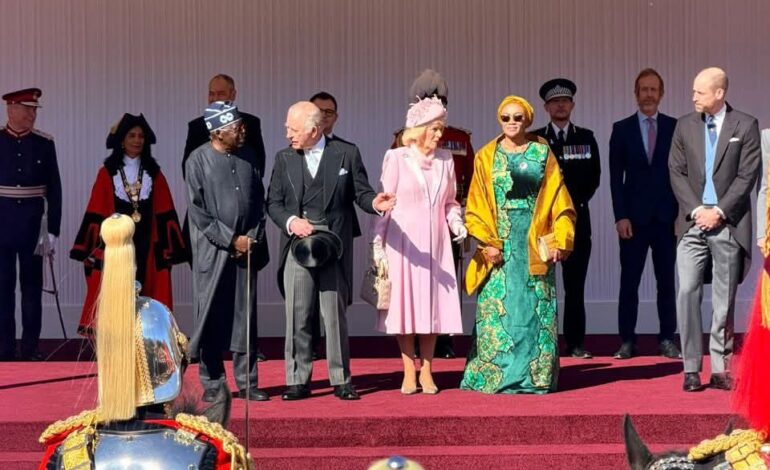


- Examining The Cost, Benefit And The Opportunity Cost Of President Bola Tinubu’s State Visit
Much is being made about the decision of the confectionery company Ovaltine to invest twenty-four million pounds sterling facility in Lagos. This is a welcome news and the creation of new jobs is very much needed. However, the investment decision was not based on a state visit; it could not have been. Ovaltine has, for generations, been an established brand in Nigeria and hard-nosed credit analysts working for the company must have made their investment advisory months ago.
We must now, devoid of spin, do a much-needed cost and benefit analysis. For a start, there is the opportunity cost of the excursion. The issue is: how much will a baggage of entourage did the trip cost? And the cost is in hard currency. We need to know, for provenance, the amount of people that accompanied President Bola Ahmed Tinubu on this trip to london.
Let us recall that the President had previously received much kudos at a time for stating that he will limit the number of people travelling with him to twenty for a foreign visit and twenty-five for a local trip.
The amount of people present in London for this week’s foreign visit makes a mockery of this. Obviously, there is no interest any longer about the cost of governance.
The modus of the trip itself is contentious. The trip after the bloody carnage in Maiduguri, which left scores dead and over a hundred people hospitalized. President should have at least made a perfunctory stop in Maiduguri on his way to London. This is what is expected in a democracy. Anybody that is familiar with British politics will know that the British Prime Minister could not have left the United Kingdom (UK) on any foreign visit, no matter how long it had been planned and how important after such direct attack on the State. The head of government must be sensitive to public feelings at a time of grief. The man who embodies the ethos of a democratic state must also give out the right signals.
Leadership by example should not be a cliché. For example, there can be no sensible reason for the governors of Zamfara and Kastina State to be on any foreign trip right now. Both states have been hobbled by the activities of murderous criminals; both states have a lot of people in hospital and an increasing amount of internally displaced people in makeshift camps. The two governors have no business being outside of their states at this particular moment in time. If they desire humanitarian assistance, they can make the appeal virtually and through diplomatic channels. Sadly, there is no evidence that they are making appeal for humanitarian assistance in their current junket to London.
Contrary to the position of the spin doctors, the trip is a big win for the British government. The former colonial master has consolidated its lead on Nigeria vis-à-vis international trade. At the moment, Britain enjoys a 5 billion pounds starling surplus over Nigeria and definitely intends, quite sensibly from their own perspective, to maintain this.
Indeed, there is no evidence available in public that the Nigerian government has worked out a strategy to close or eliminate this yawning trade gap, which is clearly not in our favor. What we are seeing is very much more of the same.
The British, and the West as a whole, have a compelling reason to start to woo African countries in a new scramble for Africa, which shows that nothing has changed. The Chinese incursion has given them a wake-up call and in a situation where Africa is now a clear centre for rare earth minerals, which will decide the future, the West clearly has no, intention of being left behind.
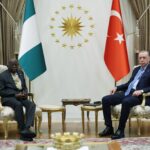
The government and its spin doctors must answer the question: what is the game plan and what does Nigeria actually gain from the state banquets, the photo opportunity with the King of England, and so forth? This question must be answered as a guide to the future.
The cost-benefit of this state visit is clearly in favour of the British government. The Nigerian government has to go back to the drawing board. Forty-eight hours incursions into a foreign territory does not build a sustainable economy or create the enabling environment for local investments to thrive. The country must invest more in modern education, starting with coding for pupils from the age of about five.
Nigeria must revamp its education curriculum and, most fundamentally, tackle the debilitating issue of doing business in this country. Whatever the propaganda, the ease of doing business does not create a climate for a competitive economy.
Licenses and permits take too long to obtain, and fraud and graft remain. We must eliminate, as much as possible, the delays, the fraud, and the graft, because without this, even the much touted foreign direct investors are going to be put off and will not be coming in the quantum that we need, bringing in the patient capital which is what we need, as opposed to fly-by-night vulture capitalists and hot money investors.
There is a lot to be done, but the work begins at home. The country has an electricity crisis and must face it. Mercifully, the hardly performing Minister of Power, if we can be charitable enough to call him that, will be going to face his governorship elections in Oyo State in a few weeks’ time. This is an opportunity for the President to deploy, as Power Minister, somebody with the technical competence and the interest to get on with such a make-or-break sector.
If we look at a country like Vietnam, for example, Vietnam, out of the ashes of war, has become a turbo-charged export economy precisely because they got the electricity sector right. Vietnam today has the lowest unit cost of electricity in the world. This is an uncomfortable fact for the United States of America, China, India, and everybody else. For example, in Vietnam, Samsung’s manufacturing plant exports 65 billion United States dollars’ worth of manufactured goods every year. It is not located in South Korea, its home country; it is located in Vietnam because of the competitive advantage brought upon by that country having the lowest unit cost of electricity in the world.
Nigeria must not just aim for 24/7 power; Nigeria must aim to make electricity so cost-competitive as to be able to attract manufacturing plants from countries across the world. This is what has to be done, and which no amount of state visits can or will ever do. It is, in our considered opinion, the time has come to face the basics. The emphasis should no longer be on a neo-colonial mindset of visiting former and potential colonial masters. It must begin by facing the real issues—the hard work that has to be based at home to build a competitive economy based on sustainability and the capacity to use the country’s talents and its physical resources to attract real, genuine investment.
- Briefly…
The Governor of Osun State, Ademola Adeleke, should wake up to the consequences of the video currently trending on social media, portraying Gold mining. A fellow boasts that he is running Gold mining camps illegally in Ijesa land.
The Governor and the state security must urgently investigate this. We know from Zamfara State, the Democratic Republic of Congo and other places that where there is illegal mining, armed conflict becomes inevitable. There should be no pussy-footing on this issue. It is an essential threat to the stability of Osun State.