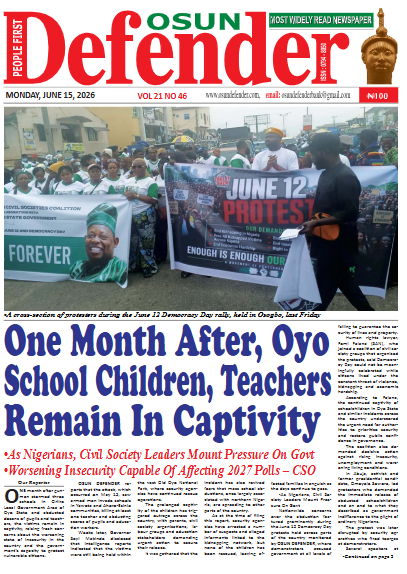
Editorial: In Remembrance of “A Farewell to Poverty”


EXPLAINER
- Friday’s Democracy Day address should have revived the vision of A Farewell to Poverty.
- Poverty eradication must become the cornerstone of national development, driving economic productivity and rebuilding the social contract that sustains democracy.
- We salute all those who fought for democracy, especially those who made the ultimate sacrifice. May their souls continue to rest in peace.
The nation owes former President Muhammadu Buhari a debt of gratitude for designating June 12 as Nigeria’s Democracy Day. It is the most appropriate date, for the momentous events associated with that day must remain central as we strive to consolidate and deepen our democracy.
To put it in context, the freest and fairest election Nigeria has ever conducted should have become the foundational block for the construction of a new society. Crucially, that election slayed many demons. The pan-Nigerian mandate obtained by Bashorun M.K.O. Abiola filled a debilitating void in our national life. Unlike countries such as India, Ghana and Malaysia, Nigeria never developed a natural party of the national ethos — a political platform with a truly nationwide support base capable of rallying the Republic around a programme of sustainable development and fostering a genuine sense of nationhood. June 12 presented such an opportunity. It was an opportunity lost, and the nation continues to pay an increasingly punitive price for that loss.
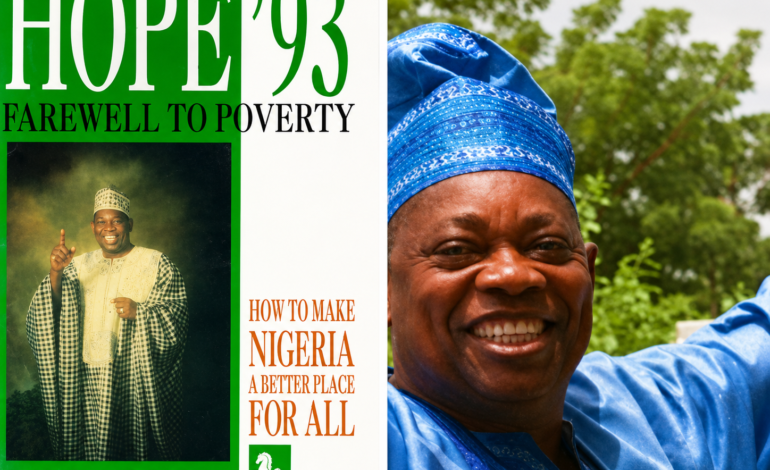
President Bola Tinubu should have used his Democracy Day address last week to re-emphasise the central issue by restating the headline promise of Bashorun M.K.O. Abiola and the Social Democratic Party’s manifesto: “A Farewell to Poverty.” Given the hardships confronting Nigerians today, it is evident that Abiola and his party anticipated many of the challenges that now beset the nation. The implementation of that programme could have helped avert much of the economic and social distress we currently endure. Bashorun Abiola possessed both the human empathy and managerial acumen necessary to successfully implement such a transformative agenda.
Today, we must revive that vision. The manifesto remains a compelling response to both the causes and consequences of Nigeria’s dysfunction.
A genuine war against poverty should not merely aim to lift tens of millions of Nigerians out of deprivation; it should become the engine room for building a productive society capable of competing and thriving in an increasingly globalised world. The prevailing neoliberal policy thrust has failed to deliver the desired outcomes and should be reconsidered.
An effective anti-poverty programme would also help reconstruct the Social Contract as the operating foundation for strengthening and deepening our democracy. Saying farewell to poverty would further accelerate the devolution of responsibilities from an overbearing central government to communities, where real development begins and where citizens can better hold leaders accountable.
Countries such as Brazil and India have demonstrated how targeted anti-poverty programmes can stimulate production, expand economic participation and generate sustainable revenues. Nigeria must learn from these examples.
The crisis in Nigeria has been sustained, in part, because criminal networks and terrorist groups have exploited mass poverty as a recruitment tool for their nefarious activities. Breaking this vicious cycle requires confronting poverty directly and decisively.
As we commemorate June 12, we must continue to honour the courage and sacrifices of all those who fought for the restoration of democracy. We especially remember those who paid the ultimate price. May their souls continue to rest in peace.
Nigeria today is poorer than it was in 1993. It is also more vulnerable and imperilled. The weaponisation of poverty has increasingly become a tool for achieving political dominance and maintaining control. This trend may stem from a misinterpretation of the notion that revolutions do not occur during periods of extreme deprivation, but rather during periods of rising expectations and relative prosperity. Such theories must not be taken out of context. The pursuit of immediate political gratification at the expense of long-term national stability is both dangerous and destructive.
What Nigeria requires now is a return to the central vision embodied in “A Farewell to Poverty.” Revitalising that agenda would provide the foundation for the fightback that is urgently needed. It is no longer merely a political aspiration; it is a necessity for our collective survival and national renewal.