Editorial: The President, the Media and the Season of Monsters

In the often quoted words of Italian political philosopher Antonio Gramsci, “The crisis lies in the inability to move away from a discredited system of relationships; a new society therefore cannot be born. In the interregnum, all manner of morbid symptoms reveal themselves. We are in the age of monsters.”
Gramsci, who was brutally murdered by the Fascist guards of Benito Mussolini, reached the height of his influence in the 1920s. Yet his reflections remain painfully relevant today. He might well have been describing present day Nigeria, where even the use of the word federal in the name of the country has long been contested.
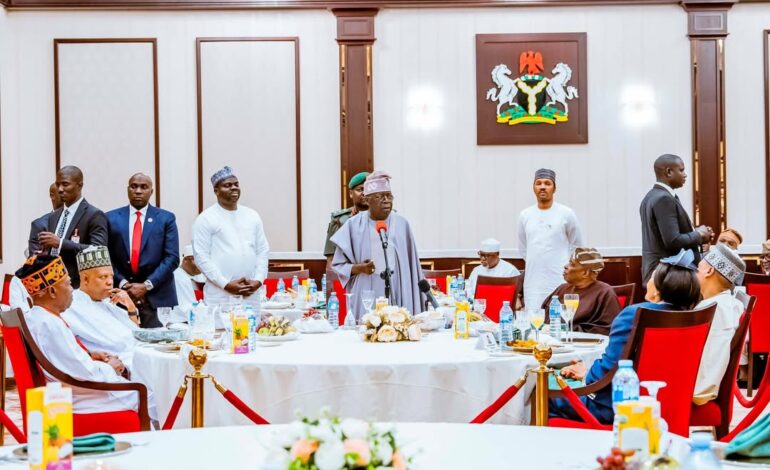
These contradictions resurfaced during a recent interaction between the President and senior media executives at the Presidential Villa. In the midst of cordial exchanges, the President stressed that criticism should not be directed at the central government alone. He argued that subnational governments and local councils must also be scrutinised.
That point is fair. However, any serious examination of failing subnational governments must be viewed in the wider context of a defective, anti federal constitution that inexplicably lists sixty eight responsibilities on the Exclusive Legislative List. Such an arrangement reflects the practices of a unitary state, not a federation.
The gathering at the Villa was too polite to highlight the troubling case of Ogun State, where local government funds have reportedly been withheld and the third tier of government has ceased to function effectively. This failure has had serious consequences. It is worth recalling that when similar events occurred in Lagos State during the current President’s tenure as governor, the media was loud and uncompromising in its criticism, and rightly so. The same standards should apply today.
Meanwhile, in this interregnum, the morbid symptoms have intensified. Criminality and violence in ungoverned spaces have grown more widespread, posing a direct challenge to the stability of the state. The recent bombardment of Iran has exposed an additional weakness. Nigeria, operating a quasi federal, consumption driven model, failed to build the fuel reserves that might have cushioned the present disruption. Now the consequences have come home to roost, worsening an already severe cost of living crisis.
It is unfortunate that the presidential engagement did not place these existential issues at the centre of discussion. There were, however, some gains, particularly the conversations about reviewing the tariffs that are undermining the economic viability of the media. Still, this must be viewed within a broader national framework.
In addition, the media must confront the growing culture of impunity that has taken root in public administration. When officials at every level evade accountability without consequence, the public is left with a system that rewards failure and punishes integrity. This culture corrodes institutions from within and creates fertile ground for the very monsters Gramsci warned against. A vigilant and courageous press remains the last barrier against such decay.
The public also has a role to play. A society that demands little from its leaders receives little in return. Citizens must resist the normalisation of dysfunction, insist on transparency and refuse to be distracted by narratives that shift blame without offering solutions. Democratic oversight is not the responsibility of the media alone; it is a collective obligation that determines whether a nation progresses or stagnates.
Finally, Nigeria must confront the reality that no amount of political rhetoric can substitute for structural reform. Until the country embraces genuine federalism, empowers its constituent parts and strengthens institutions rather than individuals, the crisis of the interregnum will persist. The media must therefore elevate the debate, steer it away from platitudes and keep the focus firmly on the foundational issues that will determine Nigeria’s survival and cohesion.
The media, operating in dangerous and uncertain times, must not allow others to set the terms of debate. It must define both the context and the boundaries of national discourse, guided by the interests of the country, its cohesion and its long term stability.