EDITORIAL: The Threat To Democracy Is Real!



- We Are On The Road To Serfdom
The cover of a recent issue of The Economist holds striking relevance to Nigeria’s current political imbroglio. Alluding to international politics and the frequent own goals of political figures, it quoted a well-known adage: “Never interrupt your opponent when he is making a mistake.”
This rings true; however, as patriotic citizens, we must make a concerted effort to stop the anti-democratic forces currently operating under severe delusions of absolute power. If we fail to do this, we will all suffer the collateral damage that arises from the disruption of the democratic process. In the words of the great reggae singer Bob Marley, “When the rain falls, it won’t fall on one man’s house.”
Events of the last few days show clearly that Nigeria is suffering from a profound institutional deficit. It is as clear as daylight that the separation of powers is no longer a reality. What we are witnessing is the subjugation of supposedly independent state institutions to a cabal, serving the interests of a select group. The philosophical basis of these actions is rooted firmly in authoritarianism. The time has come for civil society to awake.
It is evident that the present methods of selection and recruitment cannot produce an independent electoral commission of the calibre successfully established in fellow African nations such as Ghana, Kenya, and South Africa.
Recent events, marked by consistent attacks on the independence of political parties, suggest a reenactment of the late General Sani Abacha’s era of the “five leprous fingers.” It is obvious that the current process is designed to lead to the coronation of a single candidate as the only credible presidential contender in the upcoming elections. Alarmingly, this also implies that the off-cycle governorship elections slated for this year in Osun and Ekiti states may have already been predetermined in favour of the ruling party.
A functioning democracy relies fundamentally on the absolute impartiality of its electoral umpires and the judiciary. When the boundaries separating the executive from these critical institutions become blurred, public trust evaporates entirely. Without this trust, the social contract fractures, leaving the electorate feeling disenfranchised before a single ballot is even cast.
All of the above is highlighted by a thoughtful analysis recently published by the discerning legal analyst, Inibehe Effiong. In his widely circulated piece, the writer made a declaration of intellectual honesty when he asked: “Is a dispute over the leadership of a political party no longer the internal affairs of the political party?”
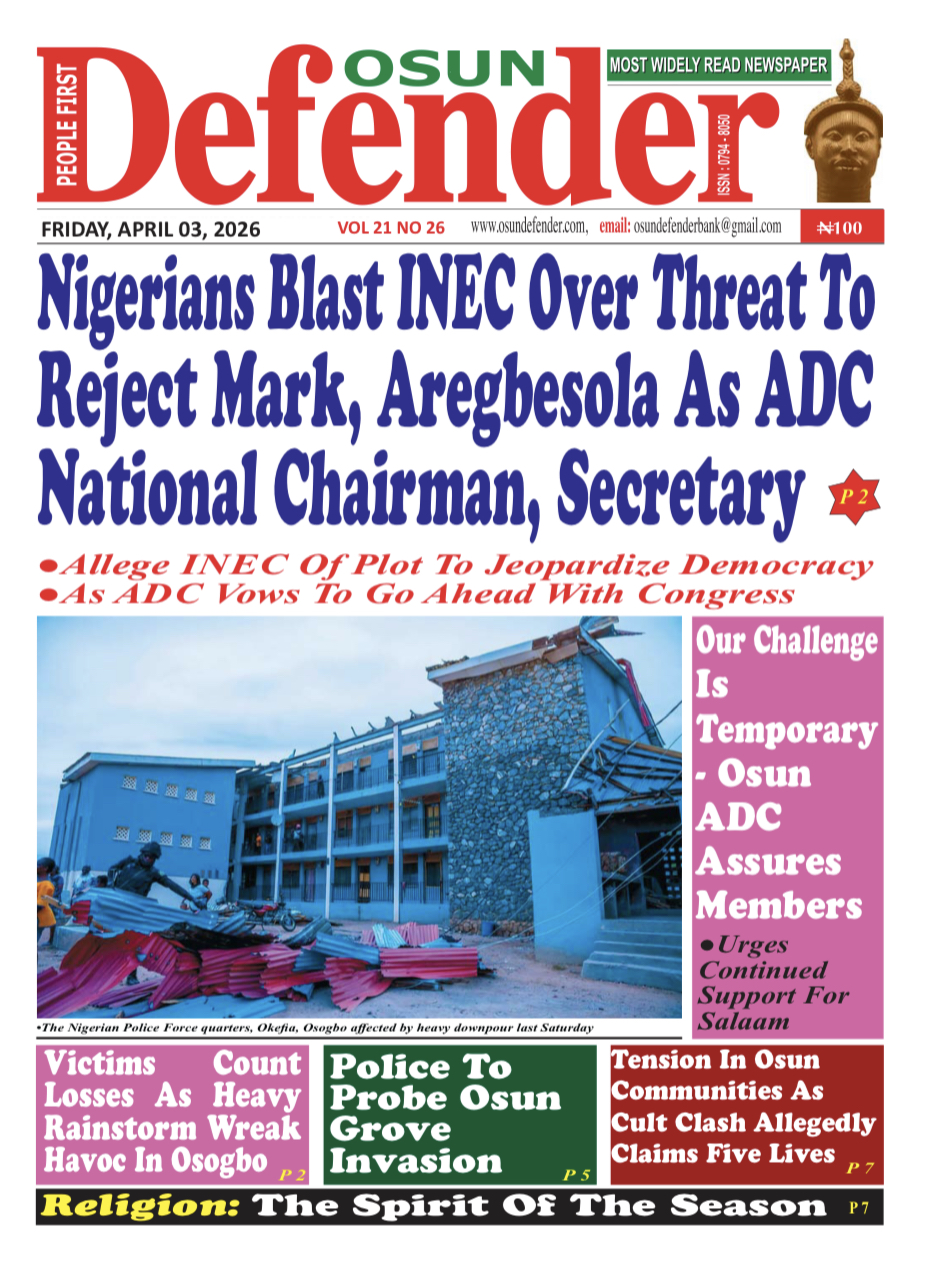
He noted that it used to be established law that issues of political party leadership were non-justiciable, or forum domesticum. He was, of course, referring to the Independent National Electoral Commission’s (INEC) present undermining of the African Democratic Congress (ADC), which is clearly meant to stop the party from gathering momentum dead in its tracks.
Effiong resoundingly stated: “The ADC is not my cup of tea, but there is now a reasonable basis to infer the existence of a well-orchestrated, sinister conspiracy to truncate contested and credible elections in 2027.”
This assertion is incontrovertible. With heavyweights such as Rabiu Musa Kwankwaso joining the ADC and others primed to follow, the architects of this “coronation” project are mounting a ferocious fightback. The counter-attacks by anti-democratic forces will be unrelenting and are bound to intensify. The kid gloves have certainly come off.
The implications of this democratic backsliding extend far beyond the ballot box; they strike at the heart of our economic stability. Political manipulation breeds uncertainty, which deters both domestic investment and foreign capital. A nation perceived to be sliding towards autocracy will inevitably find itself isolated, worsening the economic hardship already faced by millions of everyday citizens.
Furthermore, the gaze of the international community must be drawn to these unfolding anomalies. While domestic resistance is paramount, international democratic watchdogs and bilateral partners must hold the Nigerian government accountable to global democratic standards. Diplomatic pressure remains a vital deterrent against those who wish to subvert the will of the people in the shadows.
Ultimately, the greatest counterweight to this entrenched political cabal lies in Nigeria’s overwhelming youth demographic. The youth hold immense numerical power, and their structured, grassroots mobilisation can dismantle any pre-planned coronation. If channelled effectively, this collective energy can force transparency back into a system desperate to avoid it.
The work of civil society is undeniably cut out for it. A popular democratic front must be coalesced into action. All facets of civil society must be mobilised in the defence of democracy in Nigeria; we are back in the trenches. There can be no basis for complacency or wishful thinking. What is occurring today sadly marks the end of an illusion. The fightback for the restoration of democracy in Nigeria must begin now.