Guinea-Bissau Reopens Border After Military Takeover
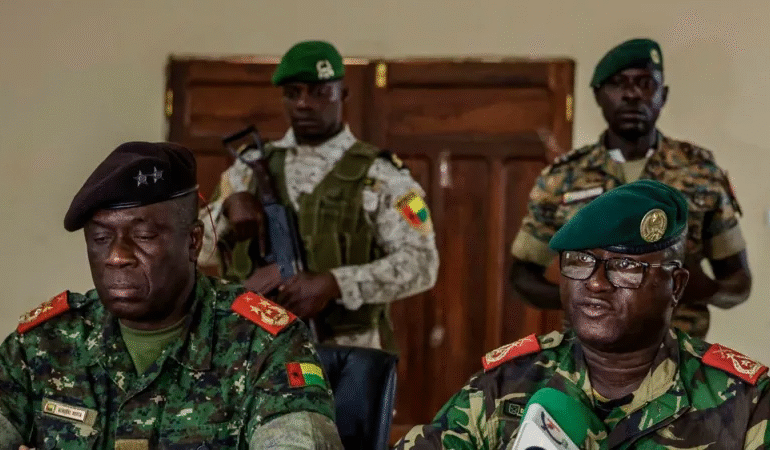


Guinea-Bissau’s capital slowly returned to life on Friday after soldiers seized power in the country’s fifth coup, disrupting presidential and parliamentary elections.
The military has appointed the army’s chief of staff, General Horta N’Tam, as transitional leader for the next one year following Wednesday’s takeover.
The putsch happened just a day before authorities were expected to release provisional results of the 23 November polls.
Vehicles, taxis, and pedestrians reappeared along the main road linking the seaside port of Bissau to the presidential palace, AFP journalists reported.
Security was relaxed in some neighbourhoods but remained tight at strategic points.
Markets reopened as traders and shoppers returned, with shops, restaurants, and small grocery outlets also back in business.
“I resumed my work because if I stay home, I will have nothing to eat,” said 25-year-old street vendor Boubacar Embalo.
“But things aren’t going too well for the moment. I have made rounds of the city since morning but have not managed to sell anything,” he added.
Neighbouring areas of Bissau were quieter, with fewer people seen in reopened markets, AFP said.
Land, air, and sea borders that were shut on Wednesday have reportedly reopened.
The nationwide curfew was lifted, and the new authorities ordered the immediate reopening of markets, schools, and private institutions.
President Umaro Sissoco Embalo left the country for Senegal after the coup.
READ ALSO
•ECOWAS Suspends Guinea-Bissau, Seeks Safe Return of Observers
•Former President Jonathan Safe in Guinea-Bissau Amid Military Takeover
Opposition candidate Fernando Dias da Costa told AFP he believed he won Sunday’s election.
He alleged that Embalo, who also claimed victory, had “organised” the takeover to stop him from assuming office.
Guinea-Bissau, bordered by Senegal and Guinea, has recorded four previous coups and several attempts since independence from Portugal in 1974.
The country’s chronic poverty and weak state institutions have made it a major transit point for Latin American cocaine trafficked to Europe.
Its last presidential election in November 2019 sparked a political crisis, with two rivals claiming power until ECOWAS recognised Embalo as president in April 2020.
Titilope Adako is a talented and intrepid journalist, dedicated to shedding light on the untold stories of Osun State and Nigeria. Through incisive reporting, she tackles a broad spectrum of topics, from politics and social justice to culture and entertainment, with a commitment to accuracy, empathy, and inspiring positive change.