Jamaica Faces Massive Destruction, Homelessness After Hurricane Melissa
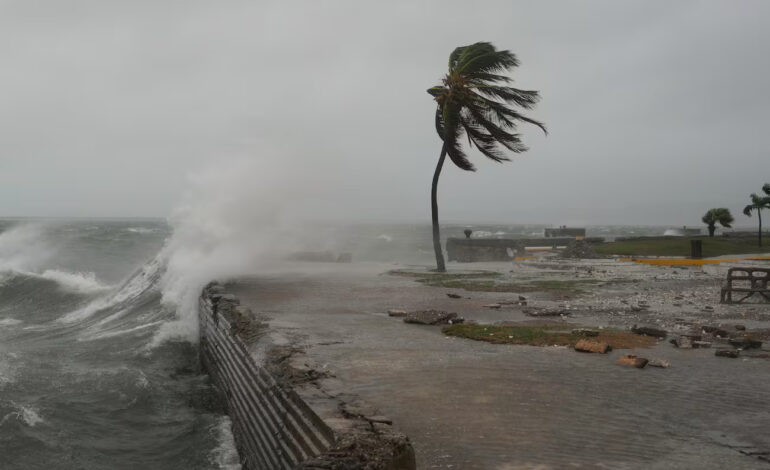


Residents of Jamaica’s north coast are facing massive destruction and homelessness after Hurricane Melissa tore through the island, toppling trees, utility poles, and homes across several communities.
In St. Ann Parish, almost all residents are without electricity, and many woke up to find their roofs gone. Fisherman George “Larry” Brown from Priory said the storm began quietly with “just a little rain,” but by 5:00 p.m. on Tuesday, the winds had intensified, ripping off his roof.
“I just heard a sound, and it just started to tear off,” said the 68-year-old, describing Melissa as the worst storm he has ever experienced.
Hurricane Melissa slammed into Jamaica as a top-level hurricane, bringing sustained winds of 185 miles (nearly 300 kilometres) per hour and torrential rainfall. According to AFP’s analysis of meteorological data, it tied the 1935 Labor Day Hurricane that devastated Florida as one of the most intense storms ever recorded.
“Gilbert is no match to this,” Brown added, recalling the 1988 hurricane many Jamaicans remember as the benchmark for devastation.
Kayan Davis, a mother of three from the same community, said her roof blew off after 11:00 p.m., leaving her and her children homeless. “I have nowhere to sleep… I am going to have to contact the authorities,” she said.
Another resident, Marvin Thomas, 40, said a tree crashed into his house around 8:00 p.m. “The tree dropped… and the housetop started to demolish,” he said. “I had to run out and go to a friend’s home.”
Thomas, who works in janitorial services, said rebuilding would be tough. “You know money is not at one place, I have to go out there to hunt now, to try to rebuild up myself,” he lamented.
In neighbouring Trelawny Parish, security supervisor Sandra Scott said her home in Salt Marsh suffered flooding and roof damage. “We had to use sandbags and sheets to prevent the water from coming in,” she said.
The parish also recorded extensive infrastructure damage, including at William Knibb High School, the alma mater of Olympic legend Usain Bolt. Parish police chief Velonique Campbell led a team of officers using machetes and chainsaws to clear blocked roads.
“We noticed that quite a few trees have been displaced in the main road and we wanted to ensure that the main road is kept clear as there will be aid and other supplies coming in,” Campbell said.
In Bog Walk, south of St. Ann, bar owner Maureen Samuels thanked God after a tree narrowly missed her business. “I came here this morning and saw what happened, thanks be to God the bar wasn’t damaged,” she said.
However, others in the community were not as lucky. The overflowing Rio Cobre destroyed several properties, including a nearby hog farm. “We have been affected badly,” Samuels said.
AFP
Titilope Adako is a talented and intrepid journalist, dedicated to shedding light on the untold stories of Osun State and Nigeria. Through incisive reporting, she tackles a broad spectrum of topics, from politics and social justice to culture and entertainment, with a commitment to accuracy, empathy, and inspiring positive change.