Kogi Govt School In Ruins As Pupils Learn Without Furniture, Roofs
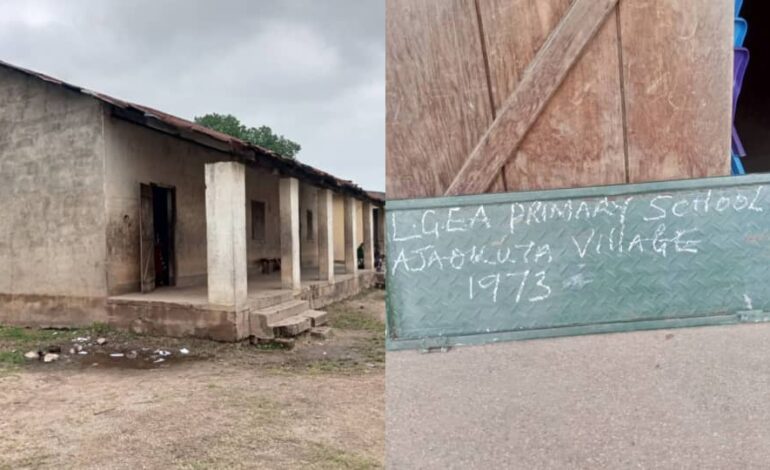


Pupils of the Local Government Education Authority (LGEA) Primary School in Ajaokuta Village, Kogi State, are learning under conditions described by residents as life-threatening, as the only public school in the area has fallen into alarming disrepair.
Built in 1973, the school which serves hundreds of children in the rural community now has gaping holes in its roofs, crumbling walls, and no ceilings. Classrooms are devoid of functional furniture, forcing pupils to sit on broken chairs, squeeze on wobbly desks, or squat on bare floors.
A visit to the school by civic technology platform, Monitng, revealed that destroyed desks and chairs are dumped like refuse behind the classrooms, further underscoring the level of neglect.
Speaking with SaharaReporters, concerned residents decried the state of the school, describing it as a “death trap” and a glaring example of government failure. They accused the state government of abandoning public education, while prioritising political propaganda and personal luxury.
“While children of the poor study in ruins, former Governor Yahaya Bello was busy using state funds meant for public education to pay upfront school fees for his children in expensive private schools.
Education was never a priority,” a community elder lamented.
The residents called on Governor Ahmed Usman Ododo to immediately intervene by renovating the school, fixing the leaking roofs, and providing desks and chairs. “We’re not asking for miracles. We just want a safe place where our children can learn with dignity,” another resident stated.
Meanwhile, data from the Universal Basic Education Commission (UBEC) shows that over ₦250 billion meant for basic education across Nigeria remains unutilised, raising further concerns about the state’s commitment to improving learning conditions in rural areas.
“The tragedy is not just in the statistics; it’s in the faces of these children who sit in collapsing classrooms hoping for a better future,” said one teacher, visibly emotional.
Sodiq Lawal is a passionate and dedicated journalist with a knack for uncovering captivating stories in the bustling metropolis of Osun State and Nigeria at large. He has a versatile reporting style, covering a wide range of topics, from politics , campus, and social issues to arts and culture, seeking impact in all facets of the society.
Related posts:
 Kogi Primary School Pupils Sit Under Collapsing Roofs, Broken Chairs Despite Gov. Ododo’s N29bn Education Budget
 A School Without Students Union Is Like Man Without Blood, NANS Tells OAU Management
 Headmaster Arrested For Selling School Furniture
 Mass Wedding: Kano Govt. Procures Furniture, Food Items, Others Worth N800m