Military Defends Jilli Aistrike, Says Village Was Long Deserted by Residents
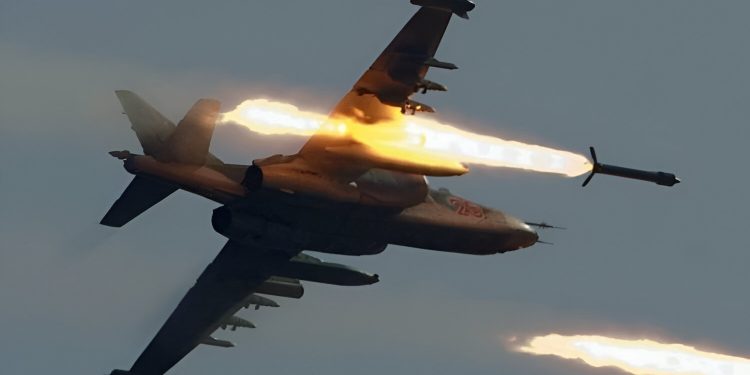


The Nigerian military has defended the airstrike carried out on Jilli market along the Borno–Yobe border, insisting that the operation targeted terrorist elements despite reports of civilian casualties.
Several people were reportedly killed and injured in the strike, which occurred on Saturday at the market located between Gubio and Geidam local government areas of Borno and Yobe states.
The Yobe State Government said the operation was part of a military offensive aimed at suspected Boko Haram insurgents operating in the area.
Meanwhile, Amnesty International condemned the incident, alleging that about 100 people lost their lives during the strike.
In a statement issued on Sunday, a spokesperson for Operation Hadin Kai in the North-East, Sani Uba, said the air raid was conducted on April 11 following intelligence, surveillance and reconnaissance missions over the Bindul–Jilli axis.
He described the action as a precision strike on a suspected terrorist enclave and logistics hub, as well as their collaborators in Jilli, Gubio Local Government Area of Borno State.
Uba said the location had been identified as a movement corridor and convergence point for fighters of the Islamic State West Africa Province and their collaborators.
He explained that the strike followed recent attacks in the region, including an improvised explosive device incident along the Bindul route in January, which killed eight soldiers, as well as coordinated assaults on April 9 in Ngamdu and Benisheik.
According to him, aerial surveillance detected motorcycles and vehicles converging near Jilli, a development later confirmed by human intelligence sources.
“More recently, on April 9, coordinated attacks were recorded in Ngamdu and Benisheik, supported by the same terrorist logistics network.
“Consequently, the theatre command intensified overhead surveillance and intelligence gathering across the area in response to persistent reports of terrorist movement and logistics activity.
“On April 11, 2026, multiple reports were received of ISWAP gun trucks and motorcycles moving along the axis,” the statement read.
Uba added that a “rigorous” targeting process was carried out before the airstrike was executed.
“Post-strike assessment confirmed that the target area was struck with high accuracy, resulting in the destruction of the identified terrorist logistics enclave.
“Scores of terrorists were neutralised, with their vehicles and technicals destroyed, while surviving elements were seen fleeing in different directions,” he said.
The military further stated that intelligence indicated those targeted were preparing logistics for planned attacks on troop positions in the Gubio axis.
It also disclosed that a suspected logistics courier, identified as Turja Bulu, was arrested on April 12 in Ngamdu and allegedly confessed to involvement in a previous attack in Benisheik.
The task force reiterated that the use of motorcycles remains banned across the North-East operational theatre, particularly in Borno and Yobe states.
Titilope Adako is a talented and intrepid journalist, dedicated to shedding light on the untold stories of Osun State and Nigeria. Through incisive reporting, she tackles a broad spectrum of topics, from politics and social justice to culture and entertainment, with a commitment to accuracy, empathy, and inspiring positive change.