Nigeria, Half Global Population, To Face Extreme Heat As Warming Nears 2°C – Study
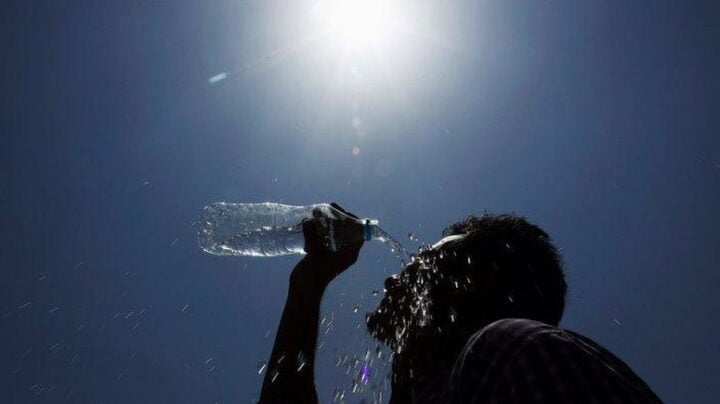


A new study says that almost half of the global population, estimated at 3.79 billion people, could be living under extreme heat conditions by 2050 if the world warms by 2°C above pre-industrial levels.
The study by the University of Oxford was published on Monday in Nature Sustainability.
The study warned that the Central African Republic, Nigeria, South Sudan, Laos, and Brazil could see the most significant increases in dangerously hot days.
Globally, India, Nigeria, Indonesia, Bangladesh, Pakistan, and the Philippines are projected to host the largest affected populations.
The authors measured extreme heat using metrics known as ‘cooling degree days’ and ‘heating degree days’, which estimate the need for cooling or heating to keep people within safe temperatures.
The projections relied on the HadAM4 climate model developed by the UK’s Met Office, which can run on multiple personal computers of volunteers.
Compared with 2010, when 23 percent of the world’s population lived with extreme heat, the study projected that share will nearly double to 41 percent as temperatures rise in the coming decades.
The researchers also noted that even countries with colder climates will experience disproportionately severe changes, with uncomfortably hot days more than doubling in Austria and Canada, increasing by 150 percent in the UK, Sweden, and Finland, 200 percent in Norway, and 230 percent in Ireland.
Jesus Lizana, lead author and associate professor in Engineering Science, said most of the changes in cooling and heating demand occur before reaching the 1.5ºC threshold, “which will require significant adaptation measures to be implemented early on”.
“For example, many homes may need air conditioning to be installed in the next five years, but temperatures will continue to rise long after that if we hit 2.0 of global warming,” Lizana said.
He noted that to achieve the global goal of net-zero carbon emissions by 2050, “we must decarbonise the building sector while developing more effective and resilient adaptation strategies”.
Radhika Khosla, associate professor at the Smith School of Enterprise and the Environment and leader of the Oxford Martin Future of Cooling Programme, called the findings a “wake-up call”.
Khosla noted that surpassing 1.5°C of warming would affect education, health, migration, and farming, and stressed that “net-zero sustainable development remains the only established path to reversing this trend for ever hotter days”.
The study also highlighted that extreme heat will drive a significant rise in energy demand for cooling, while heating demand in colder countries like Canada and Switzerland will fall.
Hafsoh Isiaq is a graduate of Linguistics. An avid writer committed to creative, high-quality research and news reportage. She has considerable experience in writing and reporting across a variety of platforms including print and online.