Nigerian Constitution Doesn’t Authorise President to Remove Governor — Falana
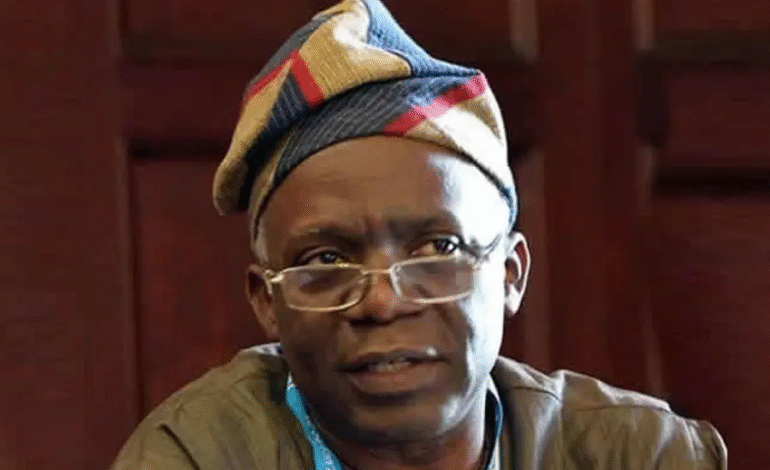


Human rights lawyer, Femi Falana, has said the Nigerian Constitution does not expressly give the President the power to assume or temporarily displace the executive or legislative institutions of a state, despite the authority to declare a state of emergency.
Falana stated this on Tuesday during an interview on Arise Television, while reacting to a Supreme Court judgment reaffirming the President’s constitutional power to declare a state of emergency where public safety or governance is threatened.
According to him, unlike the constitutions of India and Pakistan, Nigeria’s Constitution does not clearly confer such powers on the President.
“Unlike the constitutions of India and Pakistan, the Nigerian Constitution does not expressly confer power on the President to assume or temporarily displace executive or legislative institutions of a state,” Falana said.
He added that, in fairness to the Supreme Court, the justice who delivered the lead judgment issued what could be regarded as a summary judgment.
Falana said many commentators had failed to read and understand the judgment properly.
He noted that the court confirmed the President’s power to adopt extraordinary measures to restore law and order in any state where a state of emergency has been declared.
“There was no doubt before now that the President could deploy forces or take other steps to restore law and order,” he said.
Falana, however, stressed that the real controversy has always been the extent of such powers.
He explained that the Supreme Court pointed out that Section 305 of the Constitution does not clearly define the scope of powers the President can exercise during a state of emergency.
Titilope Adako is a talented and intrepid journalist, dedicated to shedding light on the untold stories of Osun State and Nigeria. Through incisive reporting, she tackles a broad spectrum of topics, from politics and social justice to culture and entertainment, with a commitment to accuracy, empathy, and inspiring positive change.