Nigeria’s 2026 World Cup Exit Result of Age Long Corruption —Ex-Sports Minister


Former Minister of Youth and Sports, Solomon Dalung, has blamed Nigeria’s failure to qualify for the 2026 FIFA World Cup as the direct consequence of longstanding corruption, impunity, and institutional hypocrisy within the system.
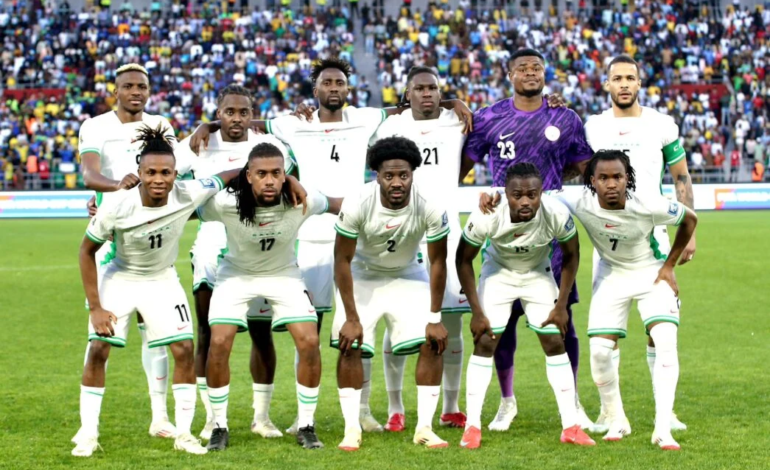
Osun Defender reports that the Super Eagles were defeated on Sunday by Leopards of the Democratic Republic of Congo in a sudden-death penalty shootout in Rabat to advance to the Intercontinental Playoff.
Dalung, in his reaction on Monday in Abuja, said the problems undermining the country’s football development dated back decades and have remained largely unaddressed because of entrenched interests.
He recalled that upon assuming office as Minister in November 2015, many stakeholders assumed that his simple appearance meant he was inexperienced.
He said he had followed the sports sector closely for years and was already familiar with the challenges confronting the Nigeria Football Federation (NFF), adding that his earliest insight came in 2002 when he served as part of the Federal Government delegation to the African Cup of Nations in Mali.
He noted that he witnessed the crisis between Captain Sunday Oliseh and the then Nigeria Football Association (NFA) over alleged arbitrary cuts in players’ bonuses.
Dalung added that even his estacode as a government delegate was not paid, leaving members of the delegation stranded until the Nigerian embassy intervened.
He explained that these experiences reinforced a philosophy taught by his mentor, that sometimes one must appear uninformed in order to observe and understand how entrenched systems operate.
Dalung narrated an encounter with an elderly cleaner who told him that “in sports we work harder for failure than for success.
He said that the cleaner had also told him that tournament budgets were prepared up to the final stage, but administrators benefit more financially when teams exit early because unspent funds are rarely accounted for.
He said this revelation proved true during his time in office, noting that attempts to demand accountability were often misrepresented as “ministerial interference.”
He added that some officials routinely petitioned FIFA to block reforms, while segments of the media unknowingly or deliberately attacked the ministry rather than investigate the root issues.
The former minister said he later constituted a technical committee led by Col. Abdulmumuni, comprising former NFA chairmen, secretaries, ex-internationals, coaches, private sector representatives, and government officials.
According to him, after extensive work, the committee identified corruption, unpaid allowances, nepotism, impunity, and a lack of transparency as the main obstacles to progress.
“A major recommendation of the committee was that Nigeria should voluntarily withdraw from global football for six months and request FIFA to set up a normalisation committee to overhaul governance and restore sanity.
‘The ministry accepted the proposal and communicated it to the President and to FIFA. However, the reform process was derailed when President Muhammadu Buhari fell ill and travelled abroad for medical treatment.
“During that period, the presidency unilaterally wrote to FIFA to disown the ministry’s report without consulting me,” he said.
He described the action as a significant victory for corruption and impunity.
The former minister said the consequences of that decision were still evident today, noting that since 2018, Nigeria had repeatedly failed to qualify for the FIFA World Cup.
He stressed that the problems affecting football were neither mysterious nor accidental but the result of long-standing administrative decay.
Dalung said only bold reforms, backed by political will and genuine accountability, could rescue Nigerian football from what he described as “the ghosts of indecision, corruption and impunity” that had continued to define the sport’s trajectory.
Hafsoh Isiaq is a graduate of Linguistics. An avid writer committed to creative, high-quality research and news reportage. She has considerable experience in writing and reporting across a variety of platforms including print and online.
Related posts:
 2026 World Cup: I Don’t Want Nigeria to Qualify – South Africa Sport Minister
 Super Eagles To Get New Coach In Two Weeks, Can’t Afford To Miss World Cup – Sports Minister
 Tokyo 2020: Sports Minister Speaks On Nigeria’s Performance At Global Sports Event
 Congo Dashes Nigeria’s 2026 World Cup Dream, Beat Eagles On Penalties