Nigeria’s Democracy Turning Into Elected Autocracy – Jega
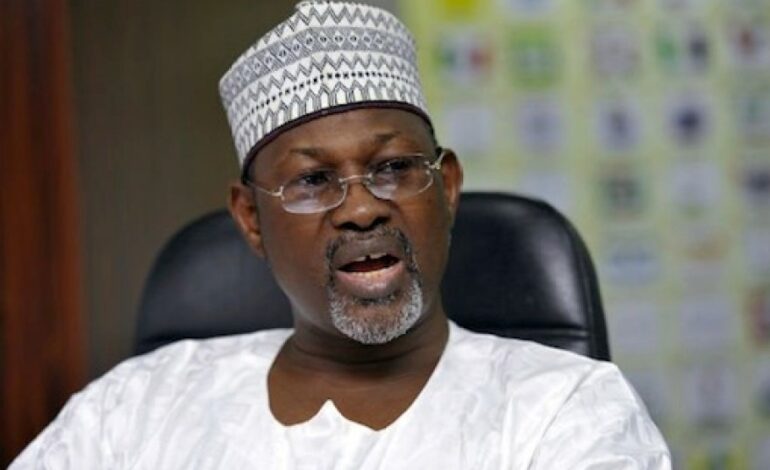


Former Chairman of the Independent National Electoral Commission (INEC), Professor Attahiru Jega, has warned that Nigeria’s democratic system is rapidly morphing into “elected autocracy,” despite nearly three decades of civilian rule.
Speaking at the June 12, 2025 edition of The Platform Nigeria in Lagos, Jega, a political science professor at Bayero University, Kano, said Nigeria has only perfected the outward rituals of democracy—such as elections, campaigns, and handovers—while failing to build institutions, responsible leadership, and civic trust.
“We are stuck in a vicious cycle where those elected to protect democracy become its greatest threat,” he declared.
He stressed the need for deep institutional reforms that would enforce accountability, uphold the rule of law, and transform governance into true public service. He singled out the constitutional immunity clause as a major flaw, describing it as “a protective shield for corruption and abuse.”
“Executives have looted public funds, trampled rights, and manipulated systems under the cover of immunity. This is not democracy. It is elected autocracy,” he said, urging for its removal.
Jega also called for urgent judicial reforms, noting that the courts have been weakened by political interference and underfunding. “A democracy without an independent judiciary is like a car without brakes,” he said.
He advocated for election petitions to be resolved before winners are sworn in and for judicial appointments to be based on merit, not political loyalty.
He further condemned the practice of conflicting court rulings on identical matters, saying it has turned the judiciary into a tool for political manipulation.
The former INEC boss also raised concern about the state of press freedom in Nigeria. According to him, the media is “under siege,” with journalists facing harassment, denial of access, or co-option by politicians.
“If the press cannot freely report and investigate, then democratic oversight collapses,” he said, calling for strict enforcement of the Freedom of Information Act and sanctions against government agencies that flout it.
On the electoral process, Jega said while INEC has made progress with technology, credibility issues persist due to executive control over appointments and excessive responsibilities.
He recommended unbundling the commission to allow it focus solely on election management.
“Technology must be secure, transparent, and eliminate room for human manipulation. Without credible elections, democracy is just a hollow ritual,” he noted.
He accused the executive arm of operating without scrutiny and called for a drastic reduction in political appointments, transparency in spending—especially security votes—and strict adherence to budgets.
“The government has become personal enterprise, not public service,” he said, urging Nigerians to demand competence and reject mediocrity.
He maintained that democracy’s survival depends not only on institutions but also on active citizen participation. “Democracy cannot be outsourced. Citizens must reject vote-buying, tribal politics, and the culture of handouts.”
He further called for diaspora voting, early voting for essential workers, and legislative quotas for women, youths, and persons with disabilities. “A democracy that excludes key segments of its population is not representative. It is a lie,” he said.
In conclusion, Jega said Nigeria must undergo a full democratic reset, insisting that civil rule does not equate to democratic governance.
“If we continue down the path of weak institutions and silenced dissent, we risk democratic collapse. Let the reforms begin. Let the people rise. Let democracy, finally, be real.”
Titilope Adako is a talented and intrepid journalist, dedicated to shedding light on the untold stories of Osun State and Nigeria. Through incisive reporting, she tackles a broad spectrum of topics, from politics and social justice to culture and entertainment, with a commitment to accuracy, empathy, and inspiring positive change.