Osun 2026: Beyond Political Hostility, Why Najeem Salaam Offers A Unifying Alternative


- By Akinyemi Oluwaseye
As the race toward the 2026 Osun State governorship election gathers momentum, the political landscape is gradually taking shape around three prominent figures, the incumbent governor, Ademola Adeleke; the All Progressives Congress (APC) contender, Bola Oyebamiji; and the African Democratic Congress (ADC) flagbearer, Najeem Folasayo Salaam.
While elections are naturally competitive, the current political climate in Osun suggests that the state may again be heading toward a contest defined more by hostility than by constructive ideas for governance. In such an atmosphere, the people of Osun must begin to ask a deeper question, Which candidate truly offers the leadership capable of stabilizing and unifying the state?
Adeleke’s Leadership and Questions of Political Conviction.
Governor Ademola Adeleke came into office on a wave of popular enthusiasm. His administration has maintained a strong public presence and has continued to enjoy grassroots support in several parts of the state.
However, beyond the optics of governance lies a lingering political question that many observers cannot ignore. At a critical moment in Osun’s political journey, Adeleke reportedly sought to decamp to the APC. That attempt—widely discussed within political circles—ultimately did not materialize after the move was rejected.
For many, that episode raised concerns about political conviction and stability. When a sitting governor explores abandoning the platform that brought him to power, it naturally invites questions about courage of leadership and ideological consistency. The situation became even more embarrassing when the move reportedly failed to gain acceptance within the APC structure.
Leadership requires clarity and firmness, particularly in moments when political pressure is high. The perception that the state’s chief executive once considered abandoning his mandate in such a manner inevitably casts a shadow over the confidence expected of a sitting governor.
The APC Option: A Return to Familiar Political Tensions
The candidacy of Bola Oyebamiji represents the APC’s attempt to reclaim power in Osun. Oyebamiji is widely recognized as a technocrat with experience in financial management and public administration.
Political observers see his candidacy less as a fresh direction and more as a continuation of the political structure associated with former governor Gboyega Oyetola.
To critics, this effectively positions Oyebamiji as a potential second term by proxy for the Oyetola political establishment. That era of governance, fairly or unfairly, is remembered by some segments of the public for political resentment and perceived vindictiveness toward opponents.
In a state that has already experienced deep partisan divides, the prospect of returning to that political climate raises concerns about whether Osun would move forward or relapse into cycles of political retaliation.
When Politics Becomes Hostility.
The ongoing tension between the political camps surrounding Ademola Adeleke and the APC structure represented by Bola Oyebamiji has increasingly shaped the state’s political discourse.
Instead of healthy competition centered on ideas, policy innovation, and long term development, the atmosphere often reflects lingering grudges and entrenched rivalries. For investors, civil servants, and ordinary citizens, such hostility creates uncertainty and distracts from governance priorities.
Osun State deserves a political environment where governance is not constantly overshadowed by partisan confrontation.
Najeem Salaam: A Candidate Positioned for Unity
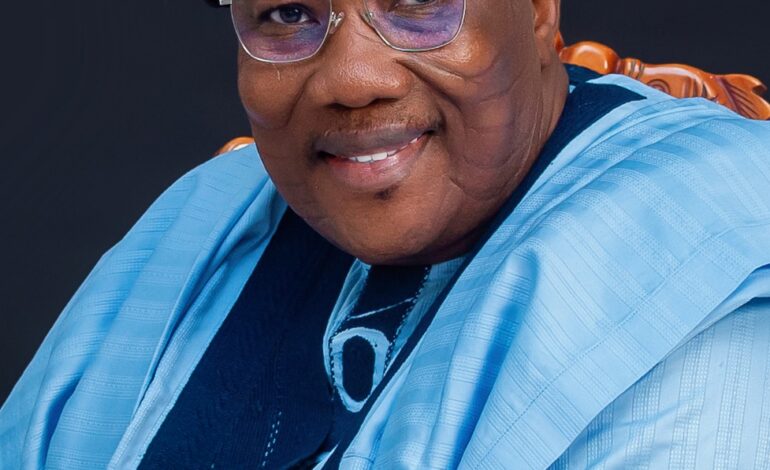
Amid this polarized environment, the candidacy of Najeem Folasayo Salaam under the African Democratic Congress (ADC) presents a different proposition.
A former Speaker of the Osun State House of Assembly, Salaam brings legislative experience, intellectual depth, and a reputation for calm, measured leadership. More importantly, he stands outside the entrenched hostility that currently defines the rivalry between the Adeleke political camp and the APC establishment.
Salaam’s candidacy offers Osun voters something increasingly rare in the state’s politics, the possibility of reconciliation.
Rather than governing from the standpoint of political revenge or survival, his leadership narrative emphasizes institutional strengthening, inclusive governance, and the rebuilding of trust across political lines.
The 2026 election offers Osun people more than just another opportunity to rotate power between familiar political camps. It offers a chance to reset the tone of politics in the state.
Choosing between Ademola Adeleke and Bola Oyebamiji may ultimately prolong the rivalry that has already dominated Osun’s political environment for years.
In contrast, Najeem Folasayo Salaam represents a bridge across that divide.
Osun State stands at a critical moment in its democratic journey. The choice before voters is not simply about personalities or party loyalty, it is about the political future of the state.
If the goal is to reduce hostility, restore civility in governance, and create a political atmosphere where development takes precedence over rivalry, then Osun people may need to look beyond the familiar camps.
In Najeem Folasayo Salaam, many see a leader capable of unifying the state, calming political tensions, and steering Osun toward a more stable and cooperative future.
In the end, the real question for voters may not be who can win the political battle but who can truly unite Osun after the election.
The opinions expressed in this publication are solely those of the author. It does not represent the editorial position or opinion of OSUN DEFENDER.