Rivers Emergency Rule: Atiku, Adeyanju, Others Blast Tinubu, Wike After Fubara’s Reinstatement
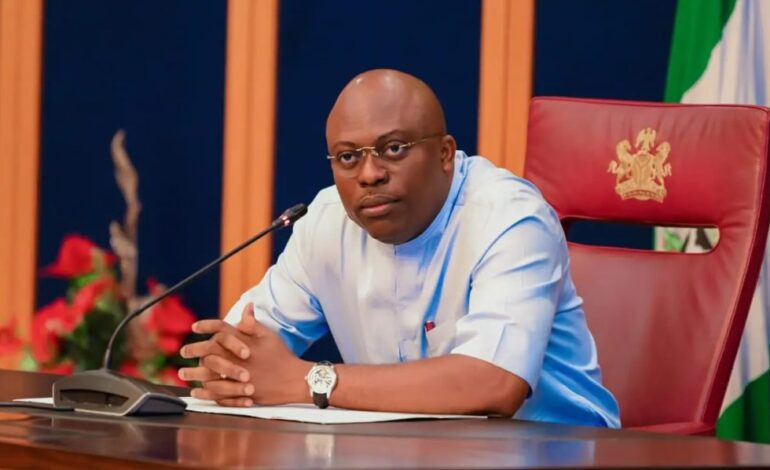


The decision by President Bola Tinubu to restore Governor Siminalayi Fubara of Rivers State has triggered a wave of sharply divided responses across the political spectrum.
Tinubu had, on March 18, 2025, declared a state of emergency in Rivers, suspending Governor Fubara, his deputy Ngozi Nma Odu, and the entire State House of Assembly.
Retired naval chief Ibok Ibas was installed as Sole Administrator during the suspension.
However, on Wednesday, the president announced the termination of the emergency rule, stating:
“It gives me great pleasure to declare that the emergency in Rivers State of Nigeria shall end with effect from midnight today. The Governor, His Excellency Siminalayi Fubara, the deputy governor, Her Excellency Ngozi Nma Odu, and members of the Rivers State House of Assembly and the speaker, Martins Amaewhule, will resume work in their offices from 18 September 2025.”
Since then, political actors, activists, and opposition voices have been weighing in, some hailing the decision as a return to democracy, while others insist it is nothing but a dangerous assault on Nigeria’s constitutional order.
Wike Praises Tinubu’s “Commitment to Democracy”
FCT Minister Nyesom Wike lauded the president for “restoring peace and democratic governance” in Rivers.
In a statement signed by his aide Lere Olayinka, Wike said Tinubu’s intervention has “renewed the confidence of Rivers people in his leadership” and urged stakeholders in the state to work together for progress.
He warned those intent on exploiting crises to stay away, stressing that “from Rivers State going forward, the only news that will emanate will be that of peace, progress, and development.”
Atiku: “Illegality Cloaked As Governance”
Former Vice President Atiku Abubakar’s media aide, Paul Ibe, dismissed Tinubu’s action as unconstitutional.
“How can you suspend what you don’t have the power to suspend?” he asked, insisting the president lacks authority to remove an elected governor.
He accused the APC-led government of weaponizing state institutions to weaken the opposition.
“This is dictatorship disguised as democracy. There’s nothing to cheer about. The suspension itself was illegal, and the reinstatement does not cure the illegality,” Ibe said.
Rights advocate Maduabuchi Idam condemned Tinubu’s handling of the crisis, saying the suspension and reinstatement had weakened Fubara beyond redemption.
“The hatchet job has been done. Fubara has been neutralized and reduced to a pawn,” he argued, adding that the supposed emergency never addressed any genuine security threat.
According to him, “this was a political power play between Wike and Fubara, and now the governor has effectively become an appendage of Wike.”
Adeyanju: “Tinubu Has Dragged Nigeria Back To Military Era”
Activist Deji Adeyanju accused the president of reviving the spirit of military dictatorship by suspending and reinstating a sitting governor.
“It is a sad day for our democracy. Tinubu, who once fought the military, has set a dangerous precedent,” Adeyanju lamented.
He also faulted the judiciary and opposition parties for failing to act, saying: “The courts should have treated this as an urgent matter to reaffirm that the judiciary remains the last hope of the people. Sadly, they failed. The opposition too failed. As Nigerians, we should all be ashamed.”
CUPP Welcomes End of Emergency, Condemns Overreach
The Coalition of United Political Parties (CUPP) said it welcomes the lifting of the emergency rule but insisted the original declaration was an unconstitutional overreach.
“The suspension of a duly elected governor, deputy governor, and legislature over a political disagreement amounted to a reckless abuse of power. Democracy survives on the people’s mandate, not presidential decrees,” CUPP said in a statement.
Sodiq Lawal is a passionate and dedicated journalist with a knack for uncovering captivating stories in the bustling metropolis of Osun State and Nigeria at large. He has a versatile reporting style, covering a wide range of topics, from politics , campus, and social issues to arts and culture, seeking impact in all facets of the society.