Rivers Saga: Is President Tinubu Right To Have Suspended Gov Fubara, Deputy?
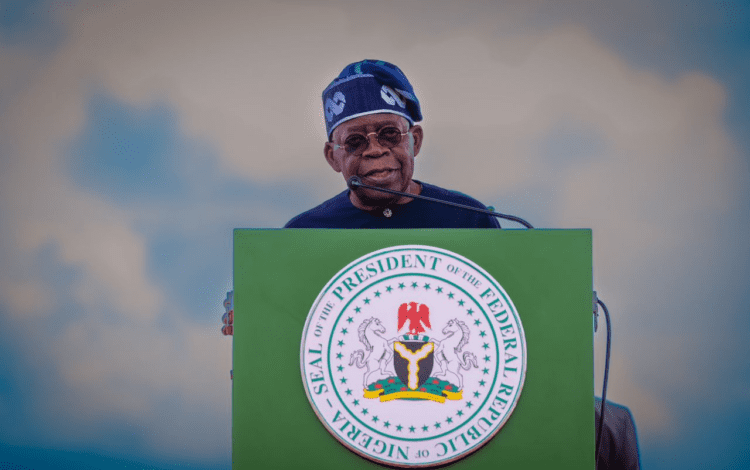


President Bola Tinubu, in a nationwide broadcast on Tuesday, said his decision to declare a state of emergency in Rivers State was taken to restore stability in the state that has been witnessing political turmoil as a result of the disagreement between the state governor and the state lawmakers.
“By this declaration, the Governor of Rivers State, Mr Siminalayi Fubara, his deputy, Mrs Ngozi Odu and all elected members of the House of Assembly of Rivers State are hereby suspended for an initial period of six months,” the President declared.
The President also appointed retired Vice Admiral Ibok-Ette Ibas as the state’s administrator to oversee governance.
“In the meantime, I hereby nominate Vice Admiral Ibokette Ibas (retd.) as Administrator to take charge of the affairs of the state in the interest of the good people of Rivers State. For the avoidance of doubt, this declaration does not affect the judicial arm of Rivers State, which shall continue to function in accordance with their constitutional mandate,” he said.
Citing Section 305 of the 1999 Constitution, Tinubu said the emergency measure was necessary to restore peace.
He added that the proclamation had been published in the Federal Gazette and forwarded to the National Assembly.
Tinubu added, “This declaration has been published in the Federal Gazette, a copy of which has been forwarded to the National Assembly in accordance with the Constitution.
“It is my fervent hope that this inevitable intervention will help to restore peace and order in Rivers State by awakening all the contenders to the constitutional imperatives binding on all political players in Rivers State in particular and Nigeria as a whole.”
Before the broadcast, Tinubu met with the Senate President, Godswill Akpabio; the service chiefs and the Inspector General of Police, Kayode Egbetokun, in a closed-door meeting.
While some have commended the decision stating that it is in the interest of the return of peace to the state, others believe the President’s action to have suspended Fubara, his deputy, Ngozi Odu and members of the State House of Assembly as a constitutional abberation.
A legal practitioner, Maruf Muhammad, who spoke to OSUN DEFENDER said although the President is empowered to declare a state of emergency, it is unlawful for Tinubu to suspend neither the Governor, his deputy nor the members of the state assembly.
Muhammad argued that Section 305 of the constitution, which provided for the impeachment does not grant the power of suspension on the elected officials.
His words, “No, the President cannot tell us he is lawfully permitted to suspend a Governor. It cannot stand. The Governor wss elected by the people and he can only be removed by the State House of Assembly through impeachment. That is the position of the law.”
In another reaction, A human rights lawyer practising in the United Kingdom, Morakinyo Olasupo, said a President does not have the power to suspend a democratically elected governor of a state, and that the suspension or impeachment of governors can only come from the state House of Assembly and the court.
He said, “The President cannot suspend a governor who is democratically elected. Governors are elected officials with a constitutional mandate, and their removal or suspension must always follow due legal processes.
“Some of the processes are impeachment by the state House of Assembly, and the procedure for impeachment is clearly stated in Section 188 of the 1999 Constitution of the country (as amended).
“Also, the Supreme Court has made it clear in the case of Inakoju vs Adeleke that impeachment of the governor by the state House of Assembly must be carried out as contained in Section 188. Another way is by court order. In the case of the election petition, if the governor’s election is contested in court, the judiciary can nullify or remove the governor.
“Another is that in the case of death or incapacitation, the governor can be removed. Incapacitation is in line with impeachment. The fourth one is that under Section 305, the President can declare a state of emergency in a state, but this does not mean that he can automatically suspend or remove the governor.
“The President cannot just wake up and declare a state of emergency unless there is war or imminent danger of war that can affect Nigeria, where there is a breakdown of law and order to the extent that it requires extraordinary measures and security, breakdown of law and order in the state or public danger, disaster and pandemic threatening the existence of Nigeria.”
Faulting the state of emergency processes, Olasupo said the declaration is subject to the approval of the National Assembly, adding that the declaration cannot be done by a mere press release or broadcast done by Tinubu but by “an instrument” (a legal document).
“After the President has prepared the instrument, he will send it to the National Assembly for deliberation and approval. Once the instrument is signed by the Assembly, the President can then proceed to declare the state of emergency. The declaration cannot hold water,” he added.
Sodiq Yusuf is a trained media practitioner and journalist with considerable years of experience in print, broadcast, and digital journalism. His interests cover a wide range of causes in politics, governance, sports, community development, and good governance.