Senate Protests Alleged Selective Withdrawal of Police Escorts
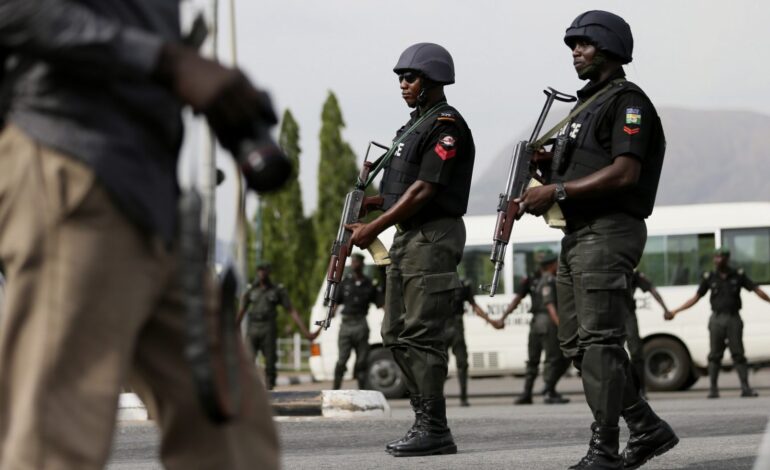


The Senate erupted in protest on Wednesday following claims that the Federal Government’s directive withdrawing police escorts from VIPs was being enforced selectively.
Proceedings had been orderly until the Senator representing Bauchi Central, Abdul Ningi, raised an alarm that while some prominent individuals had lost their police protection, others were still moving around with full security details.
Ningi’s intervention, coming from a Peoples Democratic Party lawmaker, was interpreted by many as an allegation that opposition figures were being targeted while influential members of the ruling All Progressives Congress continued to enjoy security cover.
Speaking under a point of order, he disclosed that his only police orderly had been withdrawn, even though many political office holders still had theirs intact.
He argued that if the directive must stand, it should apply equally to everyone to ensure fairness.
Ningi said, “It should be done across the board. Let’s see what happens from the office of the President, to the Vice President, to the Senate President, to the Speaker of the House, to the Ministers. Mr. President, I am coming after they have withdrawn my only orderly.
President Bola Tinubu issued the order a few weeks after the Inspector General of Police released a similar instruction.
However, the lawmakers complained that implementation remained inconsistent, prompting fresh concerns.
Reiterating the Senate’s position, Barau said, “The Senate is fully aware of the issue, and we have already tasked the Chairman of the Senate Committee on Police Affairs to conduct a thorough investigation into this matter and report back to us as soon as possible.”
Several senators also condemned what they described as preferential treatment in the distribution of security personnel.
They called for a quick resolution to ensure equity and remove any perception of political bias.
Titilope Adako is a talented and intrepid journalist, dedicated to shedding light on the untold stories of Osun State and Nigeria. Through incisive reporting, she tackles a broad spectrum of topics, from politics and social justice to culture and entertainment, with a commitment to accuracy, empathy, and inspiring positive change.