Significance Of The First Ten Days Of Dhul-Hijjah
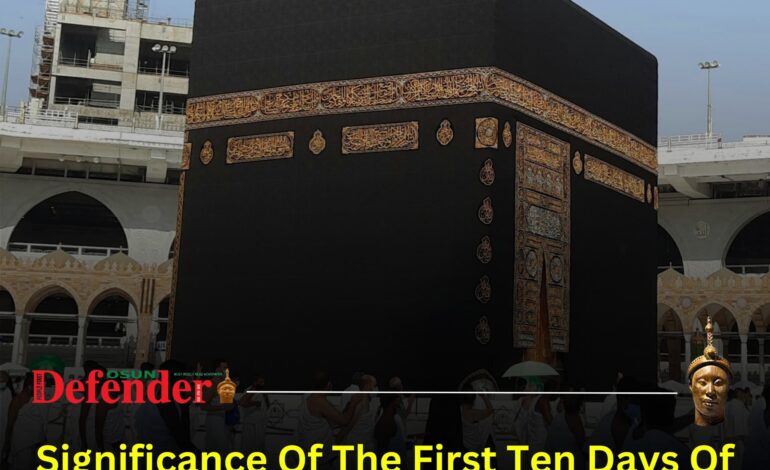


The first ten days of Dhul-Hijjah hold a sacred place in the Islamic calendar and are described in many authentic narrations as the most virtuous days of the year. Revered for their deep spiritual value, these days are a rare opportunity for Muslims around the world to attain Allah’s pleasure through acts of worship, charity, and remembrance.
Unlike any other period, these ten days encapsulate the essence of Islamic devotion and serve as a reminder of the immense mercy of the Almighty.
Dhul-Hijjah, the twelfth and final month of the Islamic lunar calendar, is not only known for Hajj – the fifth pillar of Islam – but also for encompassing Eid-ul-Adha, the Festival of Sacrifice. What elevates the first ten days of this month is the divine favour attached to them, making them superior even to the last ten nights of Ramadan, according to some scholars. These days carry profound significance in Islamic jurisprudence and traditions, as reflected in the Quran and Hadith.
For Muslims in Nigeria and beyond, the days offer a timely opportunity for spiritual rejuvenation, especially in a world filled with distractions. From fasting and remembrance to charity and prayer, every righteous deed performed during this time carries multiplied rewards.
Hence, OSUN DEFENDER presents ten key reasons why the first ten days of Dhul-Hijjah are of exceptional importance in Islam:
1. Allah Swears by Them in the Qur’an
The Qur’an opens Surah Al-Fajr with the verse, “By the dawn. And [by] the ten nights.” (Qur’an 89:1-2). The majority of classical Islamic scholars interpret these “ten nights” to refer specifically to the first ten days of Dhul-Hijjah. Whenever Allah swears by something in the Qur’an, it is a sign of its greatness and importance.
These verses signify that these ten days are divinely chosen and elevated above ordinary days. By mentioning them in this way, Allah draws the attention of believers to their immense value and encourages them to increase in devotion, worship, and good deeds.
2. Most Beloved Days for Good Deeds
Prophet Muhammad (peace be upon him) said: “There are no days on which righteous deeds are more beloved to Allah than these ten days.” (Bukhari). This hadith alone underlines the enormous opportunity these days offer. Acts such as fasting, praying, giving charity, and making dhikr are weightier in reward during this time than at any other point in the year.
The Prophet’s words remind Muslims that every act of goodness, even small ones, takes on far greater meaning and consequence in these days. It is therefore a time for spiritual reflection, repentance, and rectifying one’s relationship with the Creator.
3. Fasting on the Day of Arafah
Fasting on the 9th day of Dhul-Hijjah, known as the Day of Arafah, expiates the sins of the previous year and the year to come, according to authentic Hadith (Muslim). This single day of fasting, for those not performing Hajj, carries immense reward and spiritual purification.
The Day of Arafah is also the day when the religion was perfected. In Surah Al-Ma’idah (5:3), Allah revealed, “This day I have perfected for you your religion…” on this very day. That alone reflects the unmatched magnitude of this day within the ten.
4. Eid al-Adha
Eid al-Adha, the festival of sacrifice, falls on the 10th day of Dhul-Hijjah. It commemorates Prophet Ibrahim’s (AS) devotion to Allah and his willingness to sacrifice his son. The act of Qurbani (sacrifice) is a Sunnah that reflects sincerity, submission, and charity.
The day is not just about celebration; it’s a call to remember the values of sacrifice and obedience. Muslims are urged to attend Eid prayers, offer sacrifices where possible, and share meat with the needy – actions that hold deep spiritual reward.
5. Hajj
Hajj, one of the five pillars of Islam, occurs during these sacred days. It is a once-in-a-lifetime obligation for those who can afford it and are physically able. The rites of Hajj – from Tawaf to standing on the plains of Arafah – are acts of complete submission.
While not all Muslims can attend Hajj, the season itself brings immense blessings even for those observing from afar. Supplications, charity, and support for pilgrims are among the ways others can also engage with this monumental event spiritually.
6. Reviving the Sunnah of Takbeer
Muslims are encouraged to engage in frequent Takbeer (saying Allahu Akbar), Tahmeed (saying Alhamdulillah), Tahleel (saying La ilaha illallah), and Tasbeeh (saying Subhanallah) throughout these ten days. These words glorify Allah and keep the heart attached to Him.
Publicly reviving this practice after obligatory prayers and in the marketplaces, homes, and streets, reconnects the ummah with prophetic traditions. It is a declaration of devotion and constant remembrance that elevates spiritual consciousness.
7. A Season of Forgiveness and Repentance
Just like Ramadan, these ten days are prime time for sincere repentance. The doors of mercy are wide open, and Allah’s forgiveness is within reach for those who turn to Him. Muslims are encouraged to seek pardon for past wrongs and make sincere intention to change.
The beauty of this period lies in its accessibility. One does not need wealth or status to earn Allah’s pleasure. A broken heart, sincere dua, and humble submission are all that is required.
8. Opportunity for Charity and Compassion
Giving in charity during Dhul-Hijjah is highly rewarded, especially when done with pure intentions. Feeding the poor, supporting the less fortunate, or simply assisting others in need, all fall under the umbrella of righteous deeds beloved to Allah in these days.
Charity during this time not only brings relief to others but purifies the soul of the giver. It reminds the heart to detach from materialism and turn towards divine rewards that last beyond this world.
9. A Time to Renew Sincerity in Worship
These sacred days prompt a renewal of intention and sincerity. It is a moment to assess one’s worship and relationship with Allah – to renew daily prayers, embrace night prayers, and reconnect with the Qur’an.
Such efforts are not only beneficial in these days but lay a foundation for continued spiritual growth. They serve as a spiritual reset button, allowing believers to recalibrate their priorities.
10. A Reminder of Life’s Ultimate Purpose
Dhul-Hijjah’s ten days encapsulate the entire spirit of Islamic submission – through Hajj, sacrifice, remembrance, prayer, and charity. They remind Muslims that this life is fleeting, and that true success lies in pleasing Allah.
This period acts as a divine nudge, calling every believer back to their purpose: to worship, to reflect, and to strive for the eternal abode. It is not merely a calendar event but a divine season filled with promise, forgiveness, and elevation.
Sodiq Lawal is a passionate and dedicated journalist with a knack for uncovering captivating stories in the bustling metropolis of Osun State and Nigeria at large. He has a versatile reporting style, covering a wide range of topics, from politics , campus, and social issues to arts and culture, seeking impact in all facets of the society.