Tinubu’s Import Waiver Policy Killing Local Grain Farming – Farmers Cry Out
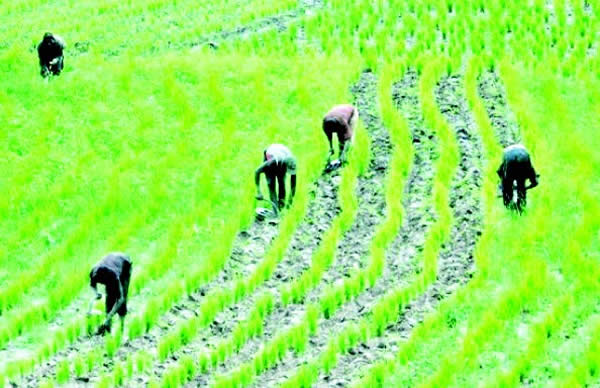


Nigerian farmers have raised fresh concerns over what they describe as the continued marginalisation of local agricultural producers, following the influx of imported rice and maize into the country’s markets.
The farmers, who took to X (formerly Twitter) to air their grievances, accused President Bola Ahmed Tinubu’s administration of pushing them to the brink of collapse through its 150-day import duty waiver policy, which they say has crippled local production of rice and maize.
Their protest comes in the wake of noticeable drops in food prices across major markets.
A market survey by DAILY POST revealed that a 50kg bag of local rice now sells for between N65,000 and N68,000, while maize is priced between N35,000 and N37,000. In contrast, imported rice is reportedly being sold for as high as N83,000 per bag, further squeezing local producers out of the market.
The drop in prices, while seemingly beneficial to consumers, has left local farmers reeling. Many say they are unable to break even due to rising production costs, worsened by skyrocketing fertiliser prices.
As a result, several farmers are said to be scaling down their operations or abandoning cultivation altogether.
The Federal Government had, in July 2024, announced a temporary suspension of import duties on food items, including rice and maize, to combat the country’s worsening food crisis.
The move, meant to last until December 2024, was touted as a stop-gap measure to ease the burden on households battling soaring inflation.
However, in what appears to be an unintended consequence, the policy has reportedly opened the floodgates to cheap foreign grains, leading to oversupply in the markets.
Experts have warned that this development could undermine national food security if local farmers continue to be sidelined.
Speaking to DAILY POST, Prof Godwin Oyedokun of Lead City University, Ibadan, described the farmers’ concerns as valid, warning that unfettered grain imports would hurt Nigeria’s agricultural sector.
“When government policies favour imports, it can lead to an oversupply in the market, which drives prices down and affects local farmers who can’t compete,” he said.
He urged the Federal Government to engage directly with farmers to understand their challenges and fashion policies that protect the domestic agricultural economy. Recommendations included targeted subsidies, improved market access, stricter import tariffs, and investment in modern farming techniques to boost productivity.
Meanwhile, data from the National Bureau of Statistics showed that while Nigeria’s headline inflation rate dropped to 22.22 per cent in June 2025, food inflation rose to 21.97 percent.
Sodiq Lawal is a passionate and dedicated journalist with a knack for uncovering captivating stories in the bustling metropolis of Osun State and Nigeria at large. He has a versatile reporting style, covering a wide range of topics, from politics , campus, and social issues to arts and culture, seeking impact in all facets of the society.