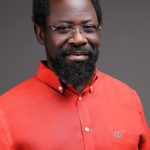
Tinubu’s Regime Worse Than Abacha’s In Crushing Free Speech – Dele Farotimi


Nigerian human rights lawyer and activist, Dele Farotimi, has declared that Nigeria under President Bola Tinubu is in a worse state than it was during General Sani Abacha’s regime, particularly in terms of suppressing free speech and public dissent
Farotimi, who also serves as the General Secretary of Afenifere, made this assertion at a symposium titled “Afenifere: Identity, Ideas and Ideology,” held on Thursday at the Muson Centre in Onikan, Lagos State.
The event was organised to commemorate the 97th posthumous birthday of Chief Ayo Adebanjo, the late leader of Afenifere, a pan-Yoruba socio-cultural group.
Farotimi reflected on the decline of the Nigerian state, stressing the urgent need for unity, ideological clarity, and citizen-led action.
He stated, “Before Baba Adebanjo died, we were already discussing this symposium. Those discussions were informed by the misunderstandings and divisions that had begun to trouble the path of Afenifere.
“Not long before Baba’s passing, I became the National Organising Secretary of Afenifere. A few weeks after his demise, it became clear that efforts must be made to clear the misconceptions around Afenifere—its ideology, its history, and its role in Nigeria. We decided to use this opportunity to celebrate Baba’s life, the ideals he stood for, and ensure those ideals are carried forward in a manner that reflects the truth and the people’s understanding.”
Farotimi added, “There is an American, Paul Bock, who said: ‘If you want to understand today, you have to research yesterday.’ The challenges Nigeria faces today are not new. When Afenifere was formed 74 years ago, it was a response to existential threats to the Nigerian project—even before independence. Issues of centralisation, calls for separation, and debates around federalism were already alive. Federalism, championed by Chief Obafemi Awolowo and the Action Group, was the middle ground.”
He criticized the centralised political system, saying, “What we have today is a one-size-fits-all system, imposed by the centre. Instead of allowing the diverse nations within Nigeria to flourish, we have a unitary arrangement masquerading as federalism. This structure has stifled development and made life nearly unbearable for many Nigerians.”
Farotimi lamented the destruction of institutions that once gave citizens a voice, stating, “Every platform that could empower the people has been systematically dismantled.”
He further stated, “With the judicial system compromised, and the law rendered meaningless, the lives of all Nigerians—whether Yoruba, Igbo, Fulani, or Ijaw—have been devalued.”
He also decried the state’s failure to protect citizens, saying, “We live in a country where armed groups are referred to as ‘hunters,’ and yet no one knows who or what they’re hunting. Citizens sleep with one eye open—or don’t sleep at all—because the state has failed in its most basic duty: the protection of lives and property. The constitution is ignored at will, and governance is marked by illegitimacy and arbitrariness.”
Drawing a historical parallel, Farotimi referenced the 1993 political crisis, saying, “After General Abacha took power on November 17, 1993, Nigerians across the country were aggrieved. Different groups had different complaints, but Afenifere served as the binding force—leading the formation of NADECO and pushing back against military tyranny. Today, the situation is even worse. In 2023, just like in 1993, the will of the people has been disregarded, and that puts the very foundation of society at risk.”
Farotimi emphasized that Afenifere’s duty was to awaken Nigerians to the common nature of their suffering, stating, “If we allow ourselves to be distracted and divided, we lose our ability to seek freedom. Those who benefit from our disunity do so by diminishing not just our civic rights but our humanity.
“Afenifere must now offer a platform for all Nigerians—regardless of ethnic background—to come together. It was never founded for the Yoruba alone but for all Nigerians. It was founded to save us from ourselves. I still hear Baba’s voice telling us: ‘Go and organise yourselves.’ He never stopped calling for unity and self-organisation. Today, we honour him not just in words but through action. What we do with his legacy is now in our hands.”
Farotimi concluded, “Afenifere is extending a hand to all Nigerians—to work with us, to find common ground and purpose, so that we may save ourselves from the crises that engulf us. This situation is not desirable—but it is not irreversible.”
Farotimi also criticized President Bola Ahmed Tinubu’s administration for its treatment of free speech and public dissent.
He pointed out multiple reports of the government suppressing free speech, limiting dissent, and curtailing protests. Journalists critical of the government have faced intimidation, harassment, and arrests.
Some media outlets critical of the administration have been subjected to fines and legal actions. Farotimi noted that the government has used social media platforms to clamp down on content deemed “fake news” or critical of the administration.
The Tinubu government has also been accused of using security forces to suppress public protests.
Protests against government policies, such as the removal of fuel subsidies, have been met with force, with protesters arrested and, in some cases, violence used to disperse crowds.
Farotimi concluded by urging Nigerians to unite and work together for a better future.
Titilope Adako is a talented and intrepid journalist, dedicated to shedding light on the untold stories of Osun State and Nigeria. Through incisive reporting, she tackles a broad spectrum of topics, from politics and social justice to culture and entertainment, with a commitment to accuracy, empathy, and inspiring positive change.