US Embassy In Iraq Hit As Middle East War Enters Third Week



Explosions rocked cities across the Middle East on Saturday as the US embassy in Baghdad was hit by a drone strike, while Tehran warned Emirati civilians to stay away from ports amid escalating attacks on energy supply lines.
The US embassy in Iraq was hit for the second time since February 28, after the United States and Israel launched strikes against Iran, triggering a regional conflict that has affected the global economy.
Waves of drone, missile, and aerial attacks have displaced millions across the region and reportedly killed more than 1,200 people in Iran, according to the country’s health ministry.
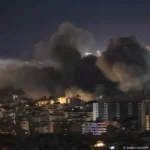
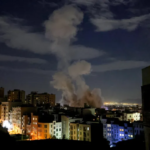
Dark black smoke was seen rising from Fujairah, a major Emirati port that includes oil storage and an export terminal. Iranian military authorities had issued warnings for Emirati civilians to avoid port areas exposed to potential strikes.
Despite facing US and Israeli military operations, Iran has launched missile and drone attacks against at least 10 neighbouring countries and has effectively restricted traffic through the Strait of Hormuz.
An AFP journalist observed a cloud of black smoke over the US diplomatic mission in Baghdad following strikes targeting the Iran-backed group Kataeb Hezbollah, which reportedly killed two members, including a “key figure,” according to security sources.
US President Donald Trump said on Friday that US forces had struck Iran’s Kharg Island, the country’s largest oil export hub, hitting military targets while sparing oil facilities. Iranian media confirmed no damage to the oil facilities.
Iran’s threats to shipping in the Strait of Hormuz have brought traffic to a virtual halt on a route that normally carries about one-fifth of global oil supplies. Crude oil prices have surged more than 40 percent since the conflict began.
Iran had warned that US-linked oil and energy firms would be targeted if the US struck its oil facilities. Trump said the US Navy would begin escorting tankers through the Strait of Hormuz “very soon” to restore oil exports.
Tabriz warning
Heavy blasts were reported in Tehran late Friday. The Israeli army warned residents in an industrial zone in Tabriz, in northern Iran, to evacuate ahead of military operations on Saturday.
The UN refugee agency estimates up to 3.2 million people have been displaced inside Iran since the war started. Iranian authorities have maintained an internet blackout since the conflict began.
According to the Pentagon, US and Israeli forces have struck more than 15,000 targets in Iran over the past two weeks. Israel’s military said it conducted 7,600 strikes, most targeting Iran’s missile programme.
Iran’s supreme leader, Ali Khamenei, was killed at the start of the US-Israeli campaign. His son, Mojtaba Khamenei, was named the new supreme leader but has been absent from public view and is reportedly wounded. Iran’s Revolutionary Guards have warned of heavy crackdowns on any anti-government protests.
The United States is reportedly sending reinforcements, including the Japan-based amphibious assault ship USS Tripoli with approximately 2,500 Marines. Thirteen US military personnel have been reported killed, including six aboard a refuelling aircraft that crashed in Iraq; US officials said the crash was not due to hostile fire.
Regional responses
Qatar said it intercepted two missiles on Saturday and evacuated key areas in the capital, Doha, after blasts were reported. Saudi Arabia said its forces intercepted dozens of drones on Friday.
The Palestinian group Hamas called on Iran to avoid targeting neighbouring countries while affirming Iran’s right to defend itself. Turkey reported that NATO forces shot down a ballistic missile launched from Iran, the third such interception in the conflict.
Lebanon has also been affected, following attacks by the Iran-backed group Hezbollah on Israel after Khamenei’s death. An Israeli strike in southern Lebanon reportedly killed at least a dozen medical personnel at a healthcare clinic. Lebanese authorities reported that at least 773 people have been killed by Israeli attacks in Lebanon targeting Hezbollah.
AFP
Olamilekan Adigun is a graduate of Mass Communication with years of experience in journalism embedded in uncovering human interest stories. He also prioritises accuracy and factual reportage of issues.