US Raises Tariffs On Chinese Imports To 245% Amid Escalating Trade Tensions
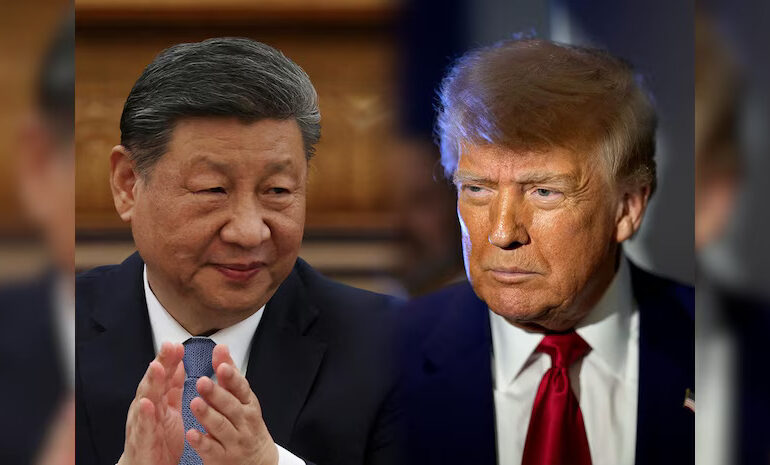


The United States has increased tariffs on Chinese imports to a staggering 245%, citing retaliatory actions by Beijing, according to a statement from the White House on Tuesday.
The move comes as President Donald Trump ordered a national security investigation into the country’s reliance on imported critical minerals—including cobalt, lithium, nickel, and rare-earth elements—used in smartphones, electric vehicles, and defence equipment.
The White House said this dependency threatens national security and economic stability.
“The US is reliant on foreign sources vulnerable to long-term supply chain shocks,” the statement noted.
Prior to this hike, the US had imposed a 145% tariff on Chinese goods, while China had responded with a 125% duty on American products and export bans on specific industrial materials.
Despite the rising tensions, China announced that its economy grew 5.4% in the first quarter of the year, with industrial output and retail sales also showing notable growth.
However, Beijing warned that global economic conditions are becoming increasingly challenging.
President Trump maintained a firm stance, declaring, “The ball is in China’s court. China needs to make a deal with us. We don’t have to make a deal with them.”
The tariff hike is part of a broader trade policy under Trump aimed at reducing foreign tariffs on US goods and revitalising domestic manufacturing.
Since February, the US has introduced cumulative tariffs starting at 10%, rising to 34% in April.
By April 9, the total had exceeded 100%, triggering market volatility.
In retaliation, China suspended imports of sorghum, poultry, and bonemeal, sanctioned 27 American companies, and lodged a complaint with the World Trade Organization.
Beijing has also reached out to India and the European Union for support, with Chinese Foreign Minister Wang Yi urging India and China to “make the elephant and dragon dance” and unite against hegemonic power structures.
Titilope Adako is a talented and intrepid journalist, dedicated to shedding light on the untold stories of Osun State and Nigeria. Through incisive reporting, she tackles a broad spectrum of topics, from politics and social justice to culture and entertainment, with a commitment to accuracy, empathy, and inspiring positive change.