US Slaps 25% Tariff On Steel, Aluminium Imports


The United States has expanded its tariff measures as sweeping levies on steel and aluminium imports took effect on Wednesday, with no exceptions or exemptions, despite efforts by countries to avoid them.
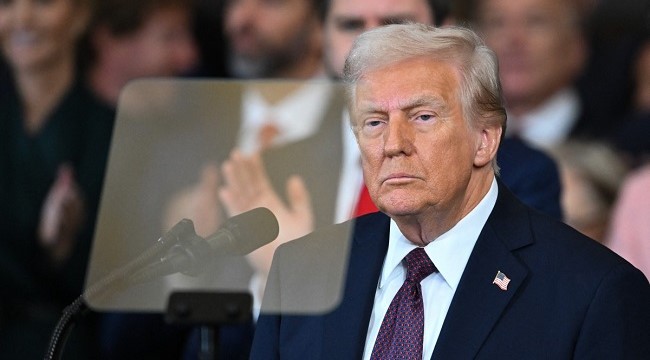
President Donald Trump imposed a 25 per cent tariff on both metals, a move expected to increase production costs for goods such as home appliances, automobiles, and drink cans, potentially leading to higher consumer prices.
Cato Institute research fellow Clark Packard stated, “It wouldn’t surprise me to see the tariffs pretty quickly show up in prices.”
He further noted that auto manufacturing and construction—both residential and commercial—are major consumers of steel in the US.
Reacting to the move, the European Commission announced it would introduce countermeasures from April 1 in response to what it described as “unjustified trade restrictions” from the US.
“We deeply regret this measure,” said European Commission chief Ursula von der Leyen. “As the US are applying tariffs worth $28 billion, we are responding with countermeasures worth” the equivalent in euros.
Trump, since returning to office, has imposed high tariffs on major trading partners, including Canada, Mexico, and China, with only partial relief for neighbouring countries. He has also threatened fresh levies from April 2.
The latest tariffs significantly affect Canada, which supplies about half of US aluminium imports and 20 per cent of its steel imports.
Other key steel suppliers include Brazil and Mexico, while the UAE and South Korea are major aluminium providers.
The Wednesday levies add to previous ones, meaning that some Canadian and Mexican steel and aluminium products could now face a 50 per cent tariff unless they comply with the US-Mexico-Canada Agreement (USMCA).
Concerns over Trump’s trade policies and their potential impact on the economy have unsettled financial markets, with Wall Street experiencing consecutive declines.
However, Trump dismissed these fears, stating he does not foresee a downturn and brushing off market losses.
His approach to tariffs has been marked by volatility. Just a day before the levies took effect, he threatened to double the tariff rate on Canadian steel and aluminium to 50 per cent.
Ontario, Canada’s most populous province, had planned to impose an electricity surcharge on three American states in retaliation for earlier US tariffs, which prompted a strong reaction from Trump.
As tensions rose, the US and Canada traded tariff threats, with Trump even escalating rhetoric about annexing Canada.
Ontario later withdrew the surcharge following negotiations with Washington.
White House spokesman Kush Desai defended Trump’s actions, stating that he “used the leverage of the American economy” to “deliver a win for the American people.”
A meeting is scheduled in Washington on Thursday between Ontario Premier Doug Ford, US Commerce Secretary Howard Lutnick, and US Trade Representative Jamieson Greer to discuss a revised USMCA ahead of the April 2 reciprocal tariff deadline.
Commenting on Trump’s shifting stance, White House senior counsellor Peter Navarro said, “It is a transition. It’s going to be at times, perhaps a little bumpy.”
Even before the new tariffs were implemented, manufacturers struggled to secure cost-effective domestic suppliers.
Packard from the Cato Institute remarked, “It’s creating massive amounts of uncertainty.”
While some US manufacturers using domestic steel have benefited from the tariffs, others argue that they only increase import costs while making American-made goods equally expensive.
Gregory Daco, chief economist at EY, highlighted that the new tariffs go further than those imposed by Trump in 2018, affecting finished products in addition to raw steel and aluminium.
“The new steel and aluminium levies are likely to make foreign sourcing more expensive across multiple industries,” Daco noted.
Despite recent visits by Australian and Japanese officials to Washington seeking exemptions, the US administration has refused to grant any.
Australian Prime Minister Anthony Albanese criticised the tariffs as “entirely unjustified” but confirmed that his country would not retaliate.
It remains uncertain whether Trump will later offer relief to some countries or negotiate specific deals.
Looking ahead, he has pledged to introduce reciprocal levies from April 2 to counter what Washington considers unfair trade practices, potentially affecting more products and trading partners.
Titilope Adako is a talented and intrepid journalist, dedicated to shedding light on the untold stories of Osun State and Nigeria. Through incisive reporting, she tackles a broad spectrum of topics, from politics and social justice to culture and entertainment, with a commitment to accuracy, empathy, and inspiring positive change.