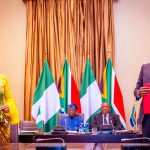
Xenophobia: ‘Africans Made Our Freedom Possible,’ Ramaphosa Cautions S/Africans
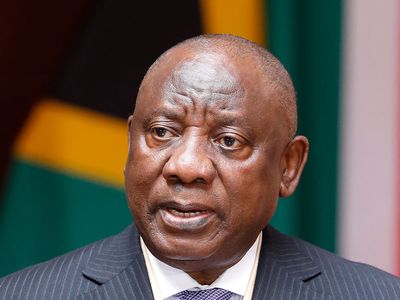

President Cyril Ramaphosa has cautioned South Africans against rising xenophobic attacks, urging citizens to resist taking the law into their own hands amid tensions over illegal migration.
Speaking during his 2026 Freedom Day address in Bloemfontein, the president invoked the continent’s support for South Africa during apartheid, stressing that such solidarity must not be repaid with hostility.
“It must never be that we trample… the African fellowship that made our freedom possible,” Ramaphosa advised.
He warned that while concerns about undocumented migration may be valid, they must not be allowed to degenerate into violence or hatred against foreign nationals.
“We should never allow the legitimate concerns of our communities about illegal migration to breed prejudice towards our fellow Africans,” he said. “We must not allow these concerns to give rise to xenophobia.”
Ramaphosa also issued a direct rebuke to individuals engaging in mob actions against suspected migrants, insisting that law enforcement remains the exclusive responsibility of the state.
“You cannot take the law into your own hands. Don’t blame foreigners — follow the law,” he stated.
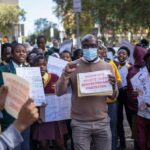
The president’s comments come amid renewed reports of attacks on foreign nationals, including Nigerians, in parts of South Africa, raising concerns over safety and diplomatic relations.
At the same time, Ramaphosa signalled a firmer approach by his administration to address illegal migration, noting that authorities are intensifying enforcement measures.
“We are clamping down on illegal migration and on businesses that employ undocumented workers,” he said.
However, he stressed that such actions must be carried out strictly within the bounds of the law.
“We will not allow people to take the law into their own hands,” he added.
The address highlights the government’s attempt to balance public frustration over economic pressures with the need to prevent xenophobic violence, while also maintaining South Africa’s historical ties with other African nations.
Earlier, a Nigerian human rights activist, Francis Nwapa had accused President Ramaphosa of enabling rising xenophobic attacks on Nigerians and other foreign nationals through silence and failure to act decisively against perpetrators.
Nwapa made the accusation in a press statement issued on Monday, April 27, 2026, where he condemned the reported denial of access to a Nigerian father and his son at a public facility in South Africa despite presenting valid legal identification.
A video circulating online shows South African citizens confronting a Nigerian man and his child at a public facility, preventing them from gaining entry.
The group, largely made up of women, was seen arguing that the man had no right to be there. However, the Nigerian man firmly disputed the claim, insisting on his legal status.
“Are you immigration, you are not an immigration, this is my IDB, you have no right,” he told the South Africans.
Hafsoh Isiaq is a graduate of Linguistics. An avid writer committed to creative, high-quality research and news reportage. She has considerable experience in writing and reporting across a variety of platforms including print and online.