Governance Beyond Personalities: A Data-Driven Path to National Development


- By Wahab Abiona
I have come to believe that good governance is not about personalities, political charisma, or how persuasive a leader sounds on a podium. It is, instead, about systems — how a nation identifies the needs of its people and how effectively it deploys its resources to meet those needs.
When a country continues to generate revenue, yet many of its citizens still lack access to basic healthcare, quality education, electricity, and infrastructure, then something fundamental is broken in its governance structure.
Across the world, countries that consistently perform well in development indicators are not necessarily those with extraordinary leaders, but those with strong institutions and data-driven systems. The United Kingdom, Canada, Australia, and France provide useful examples. Their progress is measurable, structured, and system-based rather than personality-driven.
The United Kingdom, for instance, allocates about 10–11% of its GDP to healthcare through the National Health Service, ensuring broad access to medical services. Canada records strong educational outcomes with high completion rates and wide access to tertiary institutions. Australia’s high Human Development Index reflects sustained investment in health, education, and income security.
France, similarly, has built a social system that reduces inequality through structured welfare and infrastructure investment.
These outcomes are not the result of sentiment or improvisation. They are the product of deliberate planning, institutional discipline, and consistent reliance on data.
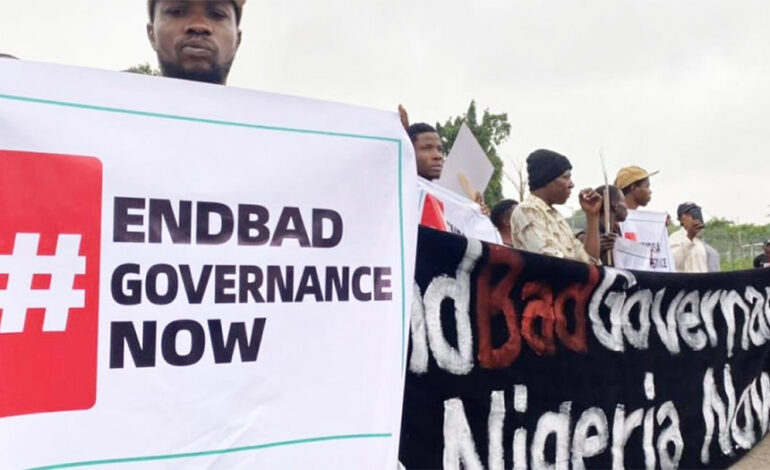
Nigeria presents a different reality. Despite being Africa’s largest economy by GDP, development indicators remain weak. A large percentage of the population lives in poverty. Healthcare funding remains low compared to global standards. The number of out-of-school children is alarmingly high, while infrastructure deficits continue to slow growth and deepen inequality.
From my observation, the core issue is not simply the absence of resources, but inefficiency in how resources are allocated and managed. Governance has too often been driven by revenue figures rather than development outcomes.
What Nigeria urgently needs is a shift toward data-driven governance. Policy decisions must begin with accurate needs assessments using census data, sector surveys, and real-time analytics to determine priority areas. Youth unemployment, for example, cannot be addressed with rhetoric; it requires targeted investment in skills development, vocational training, and enterprise support.
Equally important is accountability. In more functional systems, public spending is transparent, traceable, and regularly audited. This ensures that policies do not remain on paper but translate into real outcomes.
We must also address structural barriers limiting economic growth. A stable regulatory environment, improved access to credit, and reduced bureaucratic bottlenecks are essential for stimulating private sector development and job creation.
Ultimately, governance should not be about who occupies office. It should be about what works. Leadership is only meaningful when systems are strong enough to deliver results regardless of who is in charge.
If Nigeria is to move forward meaningfully, we must prioritize performance over personality and systems over sentiment. Development will not come from promises or slogans, but from disciplined, data-driven governance that improves the lives of citizens.
- Abiona is an Economist, Tax Consultant, and Public Affairs Analyst
The opinions expressed in this publication are solely those of the author. It does not represent the editorial position or opinion of OSUN DEFENDER.